On Wednesday morning, police entered a café in London and arrested a group of customers. They were planning a peaceful protest at the State Opening of Parliament against the UK’s government’s military support for Israel.
On Thursday, five members of Just Stop Oil were each sentenced to between 4 and 5 years in prison for planning to disrupt the M25 in protest against the UK government’s inaction on climate change.
These two incidents have two things in common.
Firstly, they both involved people being punished not for what they did but what they were thinking about doing.
Secondly, they were possible because of recent Tory legislation restricting peaceful protests and introducing new powers to arrest and punish people simply for planning protests.
It is now vital that the Labour government repeals the legislation that enabled these outrages.
I write as one of the first people arrested under the Police, Crime, Sentencing and Courts Act 2022.
At least, the police told me that I was being arrested under that act when they bundled me into a police van for expressing anti-monarchy views at a royal proclamation in Oxford. But they later told the media that they had arrested me under the Public Order Act 1986.
The reality is that many police have little idea about the law relating to protests. It is not only recent Tory laws that need repealing, but the whole framework of laws and culture relating to freedom of expression and rights to assemble and protest.
The trial of the Just Stop Oil protesters that finished yesterday was particularly unfair, with the judge’s bias being blatant throughout. He tried to stop them giving evidence about the reality of climate change, even ordering the arrest of protesters who sought to emphasise the right of juries to acquit on the basis of conscience.
The defendants said that this undermined their own promise to tell “the truth, the whole truth and nothing but the truth”. Thus they have been nicknamed the Whole Truth Five.
The judge clearly did not want the jury reminded of other occasions on which juries have exercised their right to acquit peaceful protesters. This has happened many times. For example, in 1996 the four women who disarmed a warplane bound for Indonesian attacks on East Timor were found Not Guilty on all charges after spending six months in prison on remand.
Personally, I do not support all the tactics and attitudes of Just Stop Oil. I fear that they focus far too much on disrupting ordinary people’s everyday lives rather than the activities of the powerful. Some of them fail to connect climate change with other injustices such as inequality, poverty and war, with which it is inextricably bound up.
But anyone who cares about climate change and about freedom to protest – whatever their views on Just Stop Oil – should be alarmed that people have been imprisoned for planning a protest.
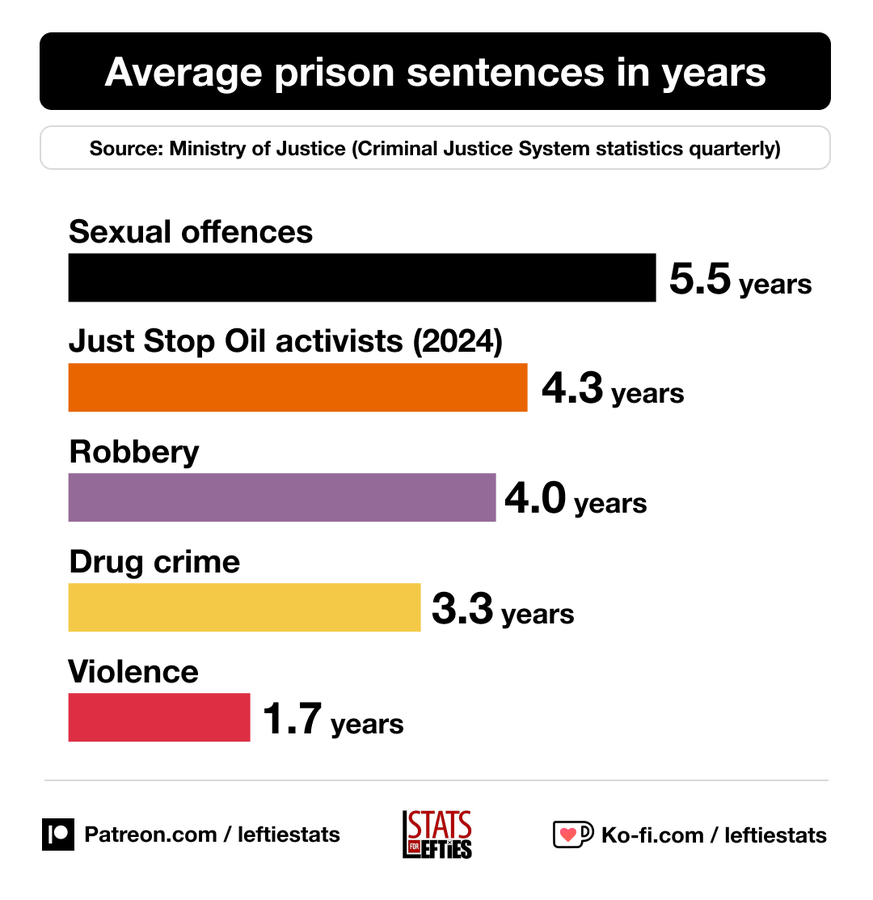
The excessive length of the sentences is chilling. The Whole Truth Five will spend longer in prison than some people convicted of sexual offences and violent crime. This is really frightening.
I do not yet know what will happen to the members of Youth Demand who were arrested in a café on Wednesday simply for planning a peaceful protest over Israel at the State Opening of Parliament in London. I will be watching out for further news.
The Labour policies announced in the King’s Speech shortly after those arrests were in several ways more progressive than I had feared. But they do not go nearly far enough, and they include nothing about repealing Tory attacks on political freedoms.
Arrests and convictions must not deter us from exercising our freedom of expression and our rights to peaceful protest. And we must ramp up the pressure on the new government to overhaul protest laws and police powers.
Otherwise, any of us could be facing five years in jail before too long.
My book The Peace Protesters: A history of modern-day war resistance explores nonviolent activism, particularly peace activism, in the UK in the last 40 years (published by Pen & Sword, 2022).
 Symon Hill