Palestine Action arrests threaten all our rights

I wrote the following article for the Church Times, who published it on 29th August 2025.

The Vice-President of the United States, J. D. Vance, has reiterated his claim that free speech is under threat in the UK. Any valid points that he might have about the policing of abortion protests are undermined by his failure to mention that hundreds of people are being arrested for supporting Palestine Action (PA).

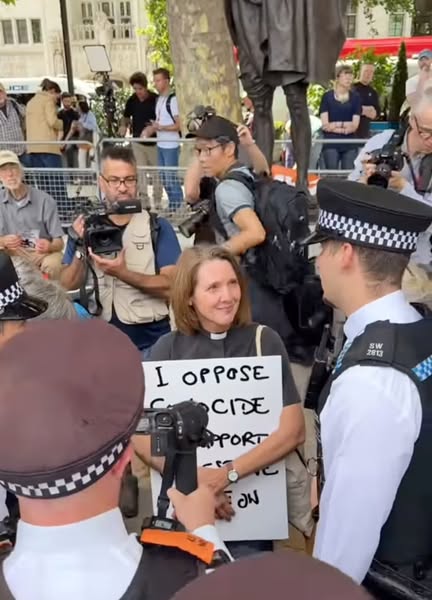
The banning of Palestine Action under the Terrorism Act had only just come into force last month when footage went viral of the arrest of the 83-year-old priest the Revd Sue Parfitt at a protest. After less than two months, the number of those arrested in connection with PA has exceeded 700. Among them are clergy of at least four denominations.

PA was banned after its members broke into RAF Brize Norton to damage weapons. But the people accused of entering Brize Norton have been arrested under existing laws, as have other PA members. The ban does not target PA’s activists, but those who publicly agree with them. It criminalises opinions.

Most people who have been arrested so far have carried signs that read “I oppose genocide. I support Palestine Action.” I wonder whether I would be arrested for a sign that read “I broadly support Palestine Action, but think some of their tactics are misguided.” I easily could be. The first five words are illegal.

The Home Secretary, Yvette Cooper, has doubled down. She claims that many PA supporters do not understand the nature of the group. So, why criminalise such apparently ignorant people? She says that court restrictions prevent her revealing “the full nature of this organisation”. In other words: trust the people with power: they know more than you do. I doubt whether this sort of request will work.

 PA was founded in 2020, when I was on the staff of the Peace Pledge Union (PPU), Britain’s leading pacifist group. One of PA’s two founders is a PPU member. Impeding the arms industry has been the core of PA’s activity. The group’s critics label its members as violent. But, whatever the rights or wrongs of destroying property, the word “violent” surely refers to harming a living being. To describe the destruction of weapons as violent is to give property the same value as people.

Only the most grotesque priorities can lead ministers to condemn damage to weapons while continuing to supply those weapons to regimes that bomb children.

It is when they have deviated from targeting arms production that PA’s members have lost support. When they daubed paint and scrawled graffiti on Rico House in Manchester, protesting against Israeli landlords, their target was far from obvious to people working in rented offices there, many from the mostly Jewish local area. Whatever their intention, PA gave the impression that they were targeting Jews rather than genocide. This deterred potential Jewish supporters, and led to criticism from PA sympathisers who were keen to combine opposition to Israeli aggression in Gaza with resistance to anti-Semitism.

When it comes to targeting weapons, however, widespread revulsion against genocide in Gaza has increased support for PA just as they have been banned.

Nonetheless, it is possible to disagree completely with PA, even to want its activists imprisoned, and still to oppose the group’s proscription under the Terrorism Act. Mass arrests for expressing opinions are a threat to all our rights

“I was there to bear witness to the call of Jesus to stand with those who are being silenced,” said the Revd Dr Sally Mann (pictured), a Baptist pastor arrested in London on 8 August. Passionately opposed to British arms sales to Israel, she said that she would be just as opposed to arming Hamas.

Like several other clergy, Dr Mann received support from her congregation. The morning after the Roman Catholic priest Fr John McGowan was arrested, he was applauded at mass; but, when he had arrived at the demonstration the day before, he heard someone calling out “Where are the church leaders? Why aren’t they saying anything?”

Several bishops and denominational leaders have condemned the supplying of arms to Israel, but have avoided mentioning the ban on PA.

Among non-churchgoers, the reaction is quite different. Look at social-media footage of Ms Parfitt’s or Dr Mann’s arrests and you will see comments from people saying that their perception of Christianity has improved. They have heard people speaking of Jesus as their reason for standing against genocide and risking arrest.

If this discovery leads them to attend a church, will they find the same enthusiasm for justice and peace?

Sixty people already face trial for supporting PA. More than 300 prominent British Jews have called for the PA ban to be reversed. The Liberal Democrats, the Green Party, Plaid Cymru, and several politicians, are backing Amnesty International and Liberty in calling for a review of terrorism legislation.

Silent bishops and denominations will face a choice as their own members stand trial for their beliefs. They can ignore one of the biggest issues facing us today; or they can bless those who hunger and thirst for righteousness. As Dr Mann puts it, “It is costly, but we need to call out genocide and war crimes no matter who commits them. Jesus shows us how to do this.”


My book, The Peace Protestors: A history of modern day war resistance (Pen & Sword, 2022) can be bought online from the Church Times Bookshop.

Draconian jail terms for Just Stop Oil show why Labour must scrap Tory anti-protest laws

On Wednesday morning, police entered a café in London and arrested a group of customers. They were planning a peaceful protest at the State Opening of Parliament against the UK’s government’s military support for Israel.

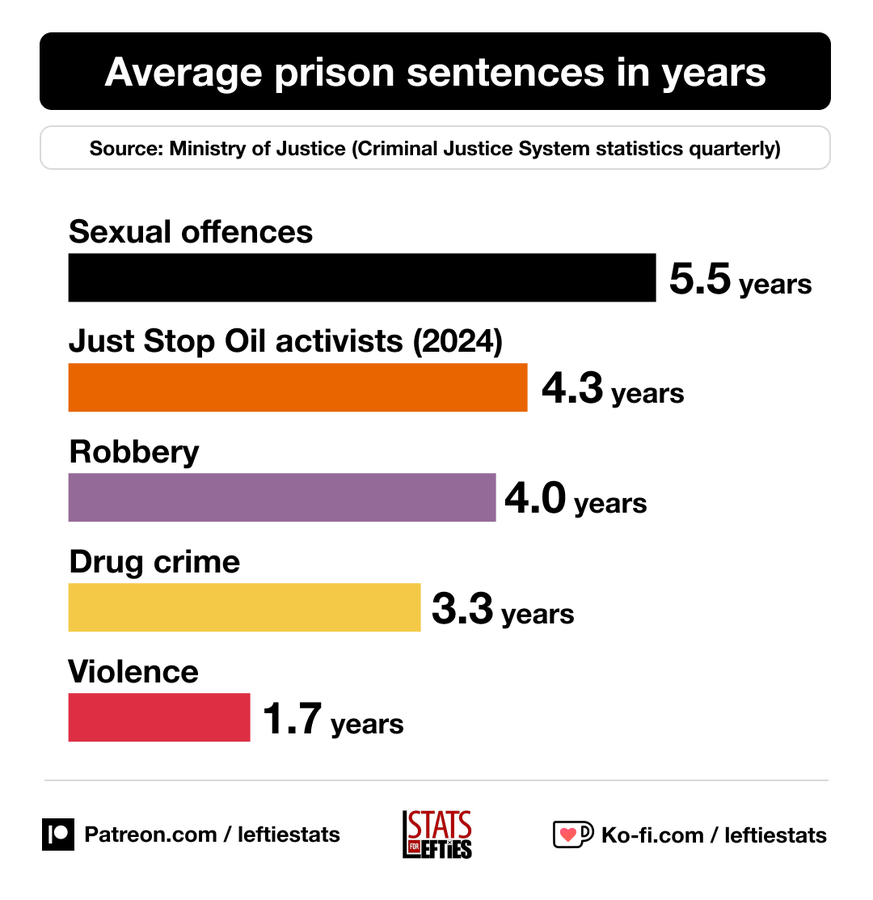
On Thursday, five members of Just Stop Oil were each sentenced to between 4 and 5 years in prison for planning to disrupt the M25 in protest against the UK government’s inaction on climate change.

These two incidents have two things in common.

Firstly, they both involved people being punished not for what they did but what they were thinking about doing.

Secondly, they were possible because of recent Tory legislation restricting peaceful protests and introducing new powers to arrest and punish people simply for planning protests.

It is now vital that the Labour government repeals the legislation that enabled these outrages.

I write as one of the first people arrested under the Police, Crime, Sentencing and Courts Act 2022.

At least, the police told me that I was being arrested under that act when they bundled me into a police van for expressing anti-monarchy views at a royal proclamation in Oxford. But they later told the media that they had arrested me under the Public Order Act 1986.

The reality is that many police have little idea about the law relating to protests. It is not only recent Tory laws that need repealing, but the whole framework of laws and culture relating to freedom of expression and rights to assemble and protest.

The trial of the Just Stop Oil protesters that finished yesterday was particularly unfair, with the judge’s bias being blatant throughout. He tried to stop them giving evidence about the reality of climate change, even ordering the arrest of protesters who sought to emphasise the right of juries to acquit on the basis of conscience.

The defendants said that this undermined their own promise to tell “the truth, the whole truth and nothing but the truth”. Thus they have been nicknamed the Whole Truth Five.

The judge clearly did not want the jury reminded of other occasions on which juries have exercised their right to acquit peaceful protesters. This has happened many times. For example, in 1996 the four women who disarmed a warplane bound for Indonesian attacks on East Timor were found Not Guilty on all charges after spending six months in prison on remand.

Personally, I do not support all the tactics and attitudes of Just Stop Oil. I fear that they focus far too much on disrupting ordinary people’s everyday lives rather than the activities of the powerful. Some of them fail to connect climate change with other injustices such as inequality, poverty and war, with which it is inextricably bound up.

But anyone who cares about climate change and about freedom to protest – whatever their views on Just Stop Oil – should be alarmed that people have been imprisoned for planning a protest.

The excessive length of the sentences is chilling. The Whole Truth Five will spend longer in prison than some people convicted of sexual offences and violent crime. This is really frightening.

I do not yet know what will happen to the members of Youth Demand who were arrested in a café on Wednesday simply for planning a peaceful protest over Israel at the State Opening of Parliament in London. I will be watching out for further news.

The Labour policies announced in the King’s Speech shortly after those arrests were in several ways more progressive than I had feared. But they do not go nearly far enough, and they include nothing about repealing Tory attacks on political freedoms.

Arrests and convictions must not deter us from exercising our freedom of expression and our rights to peaceful protest. And we must ramp up the pressure on the new government to overhaul protest laws and police powers.

Otherwise, any of us could be facing five years in jail before too long.


My book The Peace Protesters: A history of modern-day war resistance explores nonviolent activism, particularly peace activism, in the UK in the last 40 years (published by Pen & Sword, 2022).

Sunak says democracy is under threat – but it’s people like him who are threatening it

Rishi Sunak thinks that democracy is under threat in the UK. I agree with him. The difference is that I think it’s under threat from people such as Rishi Sunak and he seems to think it’s under threat from people like me. 

In the last few years, successive UK governments have eroded fundamental civil liberties and human rights, imposing greater restrictions on peaceful protest than have been seen in Britain since the Second World War.

The police have been allowed to exceed even these powers with virtually no consequences. My personal experience of this reality came with my unlawful arrest by Thames Valley Police when I objected to the proclamation of Charles Windsor as king in September 2022. Many others have faced far worse consequences. 

But now, Sunak and his allies in the right-wing media want to restrict the right to protest even further. They are justifying this assault on democracy by claiming that they are doing it to protect democracy. 

Sunak claims that there is a “growing consensus that mob rule is replacing democratic rule”.

I find it difficult to believe that such a claim could be taken seriously by many people at all, let alone that there is a “consensus” about it. Sunak’s assertion makes about as much sense as Suella Braverman’s fantasy statement that “the Islamists, the extremists and the anti-Semites are in charge now” (I’m pretty sure the Tories are still in charge, though of course some of them are indeed extremists and anti-Semites).

According to Sunak, the threat of mob rule comes from left-wing protests. In recent days, a number of ministers have attacked the overwhelmingly peaceful anti-war marches that have been regularly taking place against the Israeli forces’ murderous assaults on the people of Gaza. Home Secretary James Cleverley says that protests should stop because protesters have “made their point“. He has not suggested that Israeli forces could stop killing children because they have made their point. I would much rather not be spending time protesting against the slaughter of innocent people. The need to do so will end only when the slaughter ends. 

Parts of the media are whipping up talk of the fear and threats faced by MPs. I strongly oppose death threats to anyone. Having received quite a few of them myself over the years, I sympathise with MPs who receive a lot more and who genuinely fear for their safety. But banning protests will not make them any safer.

Six MPs have been killed in the UK in the last century – a much lower number than in some countries, but still outrageous.

The first four were killed by Irish Republicans. Of the most recent two, David Amess was killed by an Islamic fundamentalist and Jo Cox by a far-right white supremacist. Both these murders were horrific and any humane person rightly condemns them. Neither Cox nor Amess would have been saved by restricting rights to protest.

Some papers have focused on the very small number of protests that have taken place outside MPs’ homes. I agree that protesting at people’s homes is generally wrong – especially if there are children there, as they may be frightened and are not to blame for their parents’ actions. The reality is that demonstrations at politicians’ homes are relatively rare and usually small-scale.

I suspect that most of the commentators calling for a crackdown on protests know this. But talking them up diverts attention from the reality of peaceful and diverse groups of people who are marching every week against violence. 

We already have laws to deal with the vile instances of antisemitism that have increased since October. Such outrages are in no way representative of the anti-war marches that have brought together Muslims, Jews, Christians, atheists and many others to oppose the Israeli government’s military aggression. The vast majority of them also oppose Hamas’ aggression. 

The only major violent demonstration in central London in recent months was not an anti-war protest but was in effect a pro-war protest. Far-right activists fought with the police near the Cenotaph, which they claimed they had come to “protect” from people protesting against the war in Gaza on Armstice Day. Their fury had effectively been whipped up by the likes of Sunak, Braverman and Tom Tugendhat, who all must have known that in reality the anti-war march was going nowhere near the Cenotaph.

Democracy is not simply about walking into a polling station every five years and then shutting up until you’re allowed to vote again. Sunak apparently sees no irony in talking of democracy despite having been elected as Prime Minister only by the Conservative Party, and appointed to the post by a monarch elected by nobody at all. Under First-Past-the-Post, a winning party never receives more than half the votes, but is declared to have been elected democratically. 

Nonetheless, we are lucky to have more elements of democracy in the UK than can be found in much of the world. The democracy we have – however limited – is something to celebrate.

We have it not because the rich and powerful generously handed it down to us. The only reason we have any democracy at all is that our ancestors went out onto the streets and campaigned for it. Chartists, Levellers, women’s suffrage campaigners and others struggled and in some cases died for the elements of democracy that we now enjoy. It is not Sunak and the Daily Mail, but people marching against war in Gaza, who stand in the tradition of such people. 

In a country in which the super-rich have vastly disproportionate power, wealthy individuals such as Rishi Sunak are the last people likely to support taking democracy further. We can expect no help from them in working towards real democracy, in which we would have democratic control of local communities and democratic control of workplaces. 

Sunak’s government sells arms to Israel and Saudi Arabia and suppresses peaceful protest. Anti-war demonstrators are exercising their rights to resist war with active nonviolence. One side in this argument is anti-violence and pro-democracy. And Sunak is on the other side.