We face a choice: the power of Herod or the power of Jesus

This morning (Sunday 28th December 2025) I led worship at New Road Baptist Church in Coventry. I was honoured to be asked to do so, as this is the church that I attended for years when living in Oxford, and where I served as a deacon.

Below is the text of my sermon. To be clear: this is basically the text that I wrote beforehand but in practice I deviated from the wording at times and added in a few extra comments.

The picture below shows a scene from The Massacre of the Innocents by Leon Cogniet.

The sermon followed two Bible readings:

Matthew 2, 13-23

Hebrews 2, 10-18

King Herod was frightened. He was not frightened of an invading army, or violent rebels, or a rival politician, or even the Roman Emperor who had given him his power. He was frightened of a baby.

Who’s frightened of a baby? King Herod the Great, as he was known, understood something about power. He ruled over a sizeable chunk of the area that we now call Israel and Palestine, which was then part of the Roman Empire. Herod was declared by the Roman Senate to be “King of the Jews”. He was really a puppet ruler for the Roman imperial authorities.

So when the magi turn up and ask where the “King of the Jews” is to be born, Herod is alarmed. He is the King of the Jews! On one level, it’s a bizarre question. It would be like asking Keir Starmer where the Prime Minister is, or asking Donald Trump where you can find the person who really should be President of the United States.

So Herod tricked the magi, and asked them to let him know after they have found Jesus, so that he can visit him. His real purpose, we soon learn, is to kill him. That brings us to the part of the story that we heard earlier. This horrible, terrifying story that tells of how Herod massacred children to try to ensure that Jesus was dead.

Now this may not seem a very cheerful story to be discussing in the Christmas season! Sometimes we don’t know what to do with this story. It often isn’t included in readings at events such as Nine Lessons and Carols. If we include it in Christmas services, we are tempted to brush over it, an inconvenient disruption to the smooth flow of a comfortable story. Although today, 28th December, is observed particularly by our Catholic and Anglican friends as the Feast of the Holy Innocents, when these murdered children are remembered.

I want to suggest that recognising this horrible atrocity – and others like it – is very relevant to the hope and joy that we talk about at Christmas.

This is because the birth of Jesus isn’t simply a reason to feel cheerful for a day at Christmas. In Jesus, God is with us not only when we’re celebrating or feeling cheerful. God is with us however we’re feeling. Whether you love Christmas or dread it, Jesus’ birth is good news. The nativity is a story of hope in the midst of despair, love in the face of violence, solidarity in the depths of loneliness and power of a sort that the Herods of the world do not understand.

As we discussed earlier, Jesus was not visited by three kings, but by an unspecified number of magi, or wise men. Ironically, however, the story of Jesus’ birth in Matthew’s Gospel is a story with kings in it – not three kings, but two kings. On the one hand, we have King Herod, described by the Roman Empire as King of the Jews. On the other hand, we have Jesus, described by the magi as King of the Jews.

Thus Matthew’s Gospel places before two very different belief systems, two different sets of values, two different notions of power, two different calls for our loyalty – King Herod or King Jesus.

To understand this more, let’s get back into the details of the story. I think this account in Matthew’s Gospel is very relevant to life today. Scholars debate and disagree with each other about its historical accuracy. However accurate Matthew’s account is in historical terms, it is widely accepted by historians that Herod was a brutal ruler. I am not going to go into questions of precise historical fact now, however. I want to focus on how in this story Matthew presents us with truths about Jesus and about the choices that face us.

This story may seem to be full of things that seem alien to us, but if we dig a bit deeper, we will find many aspects that are really quite familiar. Herod had the sort of power that is maintained with violence and fear. I dare say he may not have been able to imagine a king who would reign in any other sort of way. Accustomed to violence and fear as he was, he responds to the birth of Jesus in the way he knows how. He orders a massacre of children in Bethlehem to ensure that the threat of Jesus is ended before it has begun. He is prepared to sacrifice the lives of many, many innocent children for that aim.

It is very hard to imagine the fear that must have gripped Mary and Joseph when Joseph was warned in a dream about Herod’s murderous plan. Did he wake up, screaming and crying perhaps? He must have woken Mary and told her about the dream. We can imagine them hastily picking up Jesus and grabbing what few possessions they could, all the while fearing that soldiers would burst through the door. That fear may well have gripped them every minute of every day until they made it to Egypt as refugees. And what of the fear and horror of the children who were killed, and their parents?

There are a few Christmas carols that do mention Herod’s massacre. The carol Unto Us a Boy is Born speaks of Herod killing the boys in Bethlehem “in his fury”. The Coventry Carol refers to Herod “raging”.

What rage? What fury? Matthew’s Gospel says that Herod was infuriated when he realised he had been tricked by the magi. But did he order this massacre in a fit of rage? Well, he might have done. But it’s also possible that this massacre was ordered not in a moment of anger but as a calm, calculated political decision. Perhaps Herod sat down with his advisers and concluded that the only way to be sure that he had dealt with the threat posed by this baby was to kill all the babies in the area.

Did Herod find some way to justify this massacre to himself? We can imagine Herod’s advisers gathering around him, telling him what he wanted to hear. Perhaps they feared that this surprising baby could become the focus for a new rebellion against Roman rule. I can imagine them telling Herod, “Well, your majesty, if this baby becomes a focus of rebellion, then there could be a violent uprising, and the Roman authorities will retaliate, and far, far more innocent people will be killed”. And they might go on. They might suggest that it is better to kill a few innocent children now so as to avoid a rebellion that could lead to far more innocent people being killed overall. 

Now that argument might not sound very convincing. But it is of course the sort of argument that certain types of politicians and commentators use all the time.

This year that is now ending, 2025, marks the 80th anniversary of the nuclear bombings of Hiroshima and Nagasaki. Nobody denies that those nuclear weapons killed innocent people – including far more children than Herod ever killed – but many will justify that massacre on the grounds that it saved more lives overall. There are people who are prepared to defend killings of Israeli children by Hamas, and other people who justify the killings of Palestinian children by the Israeli armed forces. Once you start talking about the “greater good”, you can end up justifying pretty much anything.

This is the sort of argument that the Herods of the world understand. This is the sort of power that they know about. What Herod could not have understood was that this Jesus was not merely a rival for the title “King of the Jews”. He posed a challenge to the whole structure of power and violence that Herod and the Roman Empire – and many others like them – represented.

The Herods of the world think that power comes with violence and control. Yet as he grew up Jesus lived so much by the power of love and justice that the Roman Empire considered him a such a threat that they executed him.

By the time Jesus was an adult, King Herod the Great was long dead. But Herod’s son, Herod Antipas, executed John the Baptist and was involved in the events leading to Jesus’ own execution. And the Roman imperial authorities to whom the Herods owed their loyalty made another attempt to get rid of Jesus. They thought they could rid of this troublesome Jewish peasant by crucifying him. He did not seem to have any power or strength in the way that the Herods and the Ceasars understand power.

But with Jesus’ resurrection, God confounded the world’s notions of power. The forces of sin and injustice were put on notice that their days are numbered. In Jesus we hear the good news that God’s subtle, transformative power of love and justice is on the way to winning. As Martin Luther King said, “the moral arc of the universe bends towards justice”.

Jesus calls us to live by his power. But unlike a tyrant who demands obedience, Jesus simply, gently invites us to follow him. As we heard earlier in the passage from the Letter to the Hebrews, Jesus is not afraid to call us siblings.

But it is hard sometimes to really trust in Jesus’ sort of power. We are all, I think, tempted at times to fall back on trusting in Herod’s sort of power.

Two weeks ago, I was in London, watching a group of far-right activists celebrating their racist, xenophobic and homophobic beliefs. These sort of rallies sadly happen quite often. What was unusual about this one, however, is that it was described as a “carol service” .

As many of you will know, a number of British far-right activists are claiming to defend Christianity and what they call “Christian Britain”. This is often a thinly veiled excuse to attack migrants, Muslims, Jews or LGBT+ people. On the platform at his bizarre event were several people dressed in clerical collars – clergy from fringe right-wing denominations, giving theological sanction to the far-right.

I cannot of course see into the hearts of the people on that platform. It is not for me to question the sincerity of their faith. Only God sees into their hearts, as only God sees into mine: God will judge them and me. But I can say that I do not recognise the Jesus who such people claim to be promoting.

Tragically, as Christians, we have all too often tried to turn Jesus into Herod. We have justified violence and coercion in Jesus’ name, we have insisted that Christians should have privileges in what we call a “Christian country”, and if we do not actually send people to kill the innocent, we shut the doors of our hearts and the borders of our countries and send people back to die.

Before we judge others for doing these things, let’s ask ourselves how often we have been tempted to slip back into trusting in Herod’s sort of power rather than Jesus’ power. Sometimes we are tempted to believe that only violence, coercion and privilege will be successful. If we find ourselves using the sort of arguments that Herod might have used, it is time to stop and think.

We are all challenged to make the choice between the power understood by the Herods of this world and the alternative sort of power embodied in Jesus. This is a challenge that faces us every day, in decisions big and small.

Of course, Jesus’ call is not the same for everyone. Jesus calls us to varied tasks and I do not think that he expects us all to agree about everything. But we do not have to share all the same views to take the power of Jesus as our starting-point.

And we will be tempted, and sometimes we will fail. We will face the temptation to trust in Herod’s power, to accept the idols of money, military might and selfishness. But as the Letter to the Hebrews says, Jesus himself has been tempted and he is able to help those who are being tempted. Every time we fail, God calls us again to turn around and follow the power found in a refugee baby lying in a feeding-trough.

Today and every day, in the coming year of 2026 and in every year, we face a choice: the power of the tyrant or the power of the baby. It’s up to us.   

________________________________________________________________________________________________________________

My book, The Upside-Down Bible: What Jesus really said about money, sex and violence (Darton, Longman and Todd, 2015) can be bought in paperback or e-book, priced £9.99.
The Gospel of Hope on Remembrance Sunday

On Remembrance Sunday a week ago (9th November 2025), I had the honour of preaching at Renew Inclusive Church, a Baptist church in Cambridge. They are very hospitable and made me very welcome. Below is the text of my sermon.

Although this is the text that I wrote beforehand, I deviated from the wording slightly in practice. However, the substance is the same.

The sermon followed two Bible readings:

What does the word “Remembrance” mean to you?

It seems that the meaning of the word “remembrance” isn’t quite the same as the meaning of the word “memory”. They sound like they should mean the same thing. But we use them differently. “Remembrance” isn’t just something we happen to remember. It’s something we choose to remember. And we’re used to this in Christian worship. When we take Holy Communion later, we’ll hear Jesus’ words: “Do this in remembrance of me”.

So remembrance involves choice: choosing to remember. And often, that isn’t easy. When we remember Jesus being killed, we remember a crucifixion – a human being killed. It’s not easy to think about. Sometimes, when we think about death and suffering, it is easier to forget. Or at least, it can feel easier in the moment to bury painful memories, to ignore difficult feelings, though of course that often turns out to be more difficult in the long run.

On Remembrance Sunday, we are invited to remember war. that is difficult. It is unimaginably difficult for people who have experienced war directly. Those of who have not experienced war directly, or who have only witnessed it from the margins, can be tempted to sanitise war. Instead of listening to the experiences of those who have gone through war, we may talk of honouring them – and then quickly move on.

But suffering isn’t easy to talk about. You might have experienced this if you’ve been bereaved, and well-intentioned people have – understandably – tried to say reassuring things when perhaps what you really need is someone to recognise just how terrible you feel. 

But whether we have experienced war directly, whatever we believe about the rights and wrongs of this war or that war or war generally, we all know that war is indescribably horrific. And if we are serious about remembering war, we have to face reality with honesty.

We do ourselves no favours if we pretend that remembrance is straightforward, easy or uncontroversial. Let’s have the honesty to acknowledge that remembrance is a painful – and often controversial – subject. In the first few years after World War One ended, wealthy people marked the anniversary of the Armistice on 11th November each year by holding a Victory Ball to celebrate. Veterans, struggling with poverty, demonstrated outside the Victory Balls in protest. My own great-grandfather, who fought at the Somme and won five medals in World War One, had to pawn all five of his medals after the war to feed his family. Gradually, the anniversary was marked in a more sombre way. But in 1921, veterans protested against their ongoing poverty by marching past the Cenotaph with pawn tickets pinned to their lapels instead of medals. It was an embarrassment for the government.

Remembrance continues to throw up difficult questions. What should we remember? How should we remember? Who should we remember? Many of us understandably want to remember those with whom we have a personal connection, perhaps people who we know or knew, perhaps those from our own area or who consider to have been on our own side. At the same time, let’s recognise the truth that most people who suffer in war, even most people who fight in war, have limited choice even as to which side they are on. I mentioned that my grand-grandfather fought at the Battle of the Somme. I’m very aware that if he had been born in Berlin instead of Birmingham, he would have fought on the other side at the Battle of the Somme. I’m sure many of you can think of similar examples from your own lives or your own families.

I suggest that the demands of truth, and the Gospel’s call to love our neighbour, mean that we should seek to remember victims of war of all nationalities on Remembrance Sunday. To remember the past is to learn from it. I dare say there are various views in this room about what lessons we should learn from war and about how we build peace. But the good news of Christianity is not about pretending that everything’s okay or that we have all the answers. The Gospel is not a trite reassurance. It’s about hope amidst horror. We have no business proclaiming the hope of the gospel if we do not recognise that we are broken people in a broken world, if we do not recognise the depth of the suffering into which we proclaim good news. We do not have all the answers. We look to God to guide us as we search for them.

Earlier we heard from Matthew’s Gospel, from a passage about unfathomable violence – about a massacre of children. Can any of us imagine anything more horrific? In the world today, civilians make up as much as 90% of war casualties, and the killing of children is – appallingly – not a rare event. Yet Matthew describes this horror right in the middle of the story that proclaims the hope that comes with the birth of Jesus and the failure of Herod to defeat him. Jesus brings hope amidst the horrors of violence, death and war.

I’m sure there are varied views in this room about what lessons we should learn from war, and about how we build peace. I suspect many of us do more to build peace than we realise. I have the privilege of working in a multifaith chaplaincy at Aston University in Birmingham. Every week, I see students reach across divides to build understanding with people who are different to themselves. In Welcome Week in September, I saw students of varied nationalities, faiths, personalities, cultures and sub-cultures simply start chatting, eating and playing games together in the Chaplaincy. It was just after there had been a spate of far-right protests outside accommodation for asylum-seekers, just as parts of the media were stirring up anti-migrant feelings and dividing people against each other, yet here at the grassroots in a university campus, ordinary 18-year-olds were unconsciously defying the hatemongers with their everyday reactions. In the Chaplaincy, I have sat and drunk tea with the President of the student Palestine Society and one of our university’s most pro-Israeli students, simply because they both happened to wander into the Chaplaincy at the same time. I thank God that that they did. I sometimes think our students could do a better job of sorting out the world’s problems than the politicians and diplomats. They restore my faith that God can lead “ordinary” people to achieve reconciliation and resolve differences; to build peace.

Martin Luther King spoke of two forms of peace: a “negative” peace, which is only the absence of conflict, and a “positive” peace, which involves the presence of justice. He insisted that building peace does not mean avoiding conflict. Indeed, building peace might put us in conflict with those who uphold injustice. But King encouraged people to engage in conflict nonviolently, with love for enemies and with a hope of reconciliation.

These two forms of peace – negative and positive – are very much on show in the New Testament.

The Roman Empire claimed to bring peace to the places they conquered. The Roman authorities said they offered conquered peoples “peace and security”. This supposed peace consisted of an absence of conflict. And there was no visible conflict because it was violently suppressed. With their enemies killed, there was no-one to disturb the “peace”! The apostle Paul mocked the Roman Empire’s claims about peace. In his first Letter to Thessalonian Christians, he wrote, “Just as they are saying, ‘There is peace and security’, sudden destruction will come upon them” (that’s 1st Thessalonians 5,3). To his original readers, it would have been obvious that the people saying, ‘There is peace and security’ were the Roman authorities. Paul and his readers knew that that the Empire had not brought any real peace or security.

In contrast to the fake and brutal peace of the Roman Empire, the New Testament offers us the just and lasting peace of Jesus Christ. “My peace I give to you,” says Jesus to his followers at John 14,27. “I do not give as the world gives”. This is a different peace to the imperial stifling of conflict or dissent. This is the peace demonstrated by Jesus in the nonviolent defiance of turning the other cheek. This is the peace of the upside-down Kingdom of God in which the last are first, the poor are blessed, the weak are strong and power is found in love.

Let us remember war with honesty to recognise its horrors and moral confusions. Let us remember war with humility to learn from those who have experienced it differently or more directly than us. Let us pray that God will guide us in learning as we remember, so that we may work with others to build peace – not the peace of trite reassurance, or the avoidance of conflict, or the suppression of dissent, but peace built on the justice of the Kingdom of God proclaimed by Jesus. So that as we learn from the realities of war, God will give us the hope, and show us the tools, with which to beat our swords into ploughshares and our spears into pruning-hooks.

The Peace of Christ or the Peace of Rome?

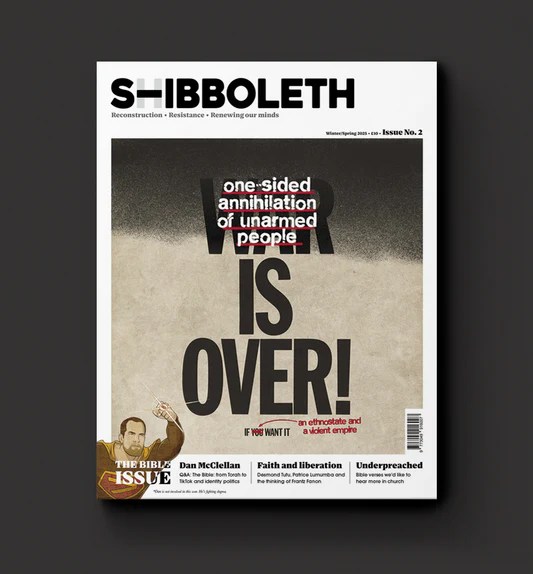
I was honoured to be asked to write about active nonviolence for Shibboleth, an excellent new Christian magazine that I heartily recommend (not just my own article!). This is my article, which appeared in Issue 2.

Jesus was executed by one of the most violent empires in history.

It is staggering just how rarely this is mentioned in churches. For centuries, we have been told that Jesus was killed by “the Jews”. Antisemitism has combined with attempts to depoliticise Jesus’ message by shifting the blame away from imperial authorities.

We cannot, however, get away from the fact that Jesus was condemned to death by Pontius Pilate, Roman governor of Judea. The gospels present the Jewish leaders as complicit in Jesus’ death, but these were the Jewish leaders who collaborated with Roman rule and owed their position to not upsetting the Romans. They were not representative of Jews generally.

Supporters of Roman rule championed the “Pax Romana” or Peace of Rome. For them, “peace” was a euphemism for order, control or an absence of conflict. There is no conflict when all resistance is crushed. The Romans claimed to bring “peace and security” to conquered lands. “When they say ‘peace and security’, then sudden destruction will come upon them,” wrote Paul in one of his earliest letters (1 Thessalonians 5,3).

Jesus proclaimed a very different sort of peace. I suggest that to understand Jesus’ teachings, we need to recognise that he was speaking to people for whom violence was a daily reality. They included civilians abused by Roman soldiers, slaves beaten by their “owners”, women mistreated by men.

Yet many Christian discussions of the ethics of violence start from the wrong place. They focus on war between nation-states and the decisions of governments.

Of course, national wars appear in the Hebrew Bible (Old Testament), which contains varied attitudes to violence. Those passages that justify massacres do not in any sense point to the God revealed in Jesus Christ. Many other parts of the Hebrew Bible include prophetic condemnations of violence and oppression. At certain points, Israelite forces are reminded to rely only on God’s strength – Gideon is told to reduce the size of his army so his victory is attributed not to military power but to God’s power (Judges 7,2).

Wars between nation-states today generally involve people being ordered to fight by their governments, based on the bizarre premise that we all have more in common with our rulers than with people like us who happen to have been born on the other side of a line on a map.

But the Christ who breaks down barriers exposes the reality of violence. And it is with Jesus’ teachings that a Christian ethic must surely begin.

When Jesus’ spoke about turning the other cheek, he was speaking to people who were used to being hit.

“If anyone strikes you on the right cheek…” says Jesus (Matthew 5,39). To be hit on the right cheek (with the right hand) implies a backhanded slap. This was the way in which people disciplined supposed inferiors. Masters backhanded slaves, men backhanded their wives, employers backhanded workers.

The submissive response to being hit is not to turn the other cheek but to cower, cringe or step backwards. These are all very understandable reactions. To respond with violence is also understandable, though probably futile when the aggressor has far more power. But calmly turning the other cheek is a gesture of nonviolent defiance, potentially confusing the aggressor and tipping the balance of power, at least for a moment.

Of course it does not work in every situation. The same can be said of Jesus’ teaching to go “another mile” – which would cause trouble for Roman soldiers who were permitted to require civilians to carry their packs for only one mile (Matthew 5,41). These methods of nonviolent defiance are suggestions. Different contexts need different suggestions, with similar principles.

Jesus’ protest in the Temple is sometimes presented as inconsistent with turning the other cheek. I suggest instead that Jesus’ teachings and actions are entirely consistent. The Temple protest was disruptive but not violent (violence involves hurting people, not damaging tables). It involved the same principles of nonviolent resistance that Jesus championed in the Sermon on the Mount.

Active nonviolence is not about judging those who are driven to resist violence with violence. I cannot condemn someone who picks up a gun in a horrendous situation that I have never faced and cannot imagine. This is different to encouraging such things.

Active nonviolence is about seeking to live by a different power. This is the power of the Kingdom of God that Jesus proclaimed, which turns notions of kingship on their head. The Kingdom is both now and not yet, a future reality that is glimpsed in the here and now in every moment that testifies to the love of God, from small moments of kindness to global campaigns against injustice.

Given its centrality in the New Testament, it is very surprising that we don’t talk more in churches about loving our enemies. Loving enemies does not mean having no enemies (how can you love your enemies if you haven’t got any?!). Nor is it a concept that can just be explained away, as with Augustine of Hippo’s tortuous argument that it is possible to love someone while killing them. Arms dealers and militarist politicians are my enemies, but I cannot kill or demonise them, nor fail to recognise my own sin and complicity in violence, if I love them in the upside-down power of the Kingdom of God.

The New Testament makes clear that living by this power – or trying to – is not about avoiding conflict. As Martin Luther King pointed out, a commitment to peace involves conflict with those who wage war. When Jesus said that he had “not come to bring peace but a sword”, he spoke about divisions within families and communities, so in that context he meant “peace” in the narrow sense of an absence of conflict (Matthew 10,34-36). The gospel involves conflict with forces of violence and injustice.

The New Testament does not teach us either to kill our enemies or to pretend that we have no enemies. Serving the Kingdom of God involves engaging in conflict with love – something that it is not possible in our own strength, but only by the subversive, transformative power of God that we see in the life, death and resurrection of Jesus. This is a power that forces of violence and domination will not tolerate. That is why, as the Quaker peace campaigner Helen Steven used to put it, following Jesus “leads straight into trouble”.

The first Palm Sunday was a riot

At LGBT+ events that have turned into commercialised parties, it is not uncommon to see critical placards declaring that “Stonewall was a riot”, or “Pride is a protest”. I was delighted to see that the Queer Theology podcast in the USA now sells T-shirts that declare “The first Palm Sunday was a riot”.

Palm Sunday – which is today – celebrates Jesus riding into Jerusalem on a donkey at the head of what was clearly a controversial protest. The occupying Roman authorities and their collaborators were surely threatened by crowds cheering the “Son of David” – a title associated with people claiming to be kings of Israel. Passover was approaching, a time when the authorities grew nervous of rebellion and Roman troops stood armed by the Temple, ready to react.

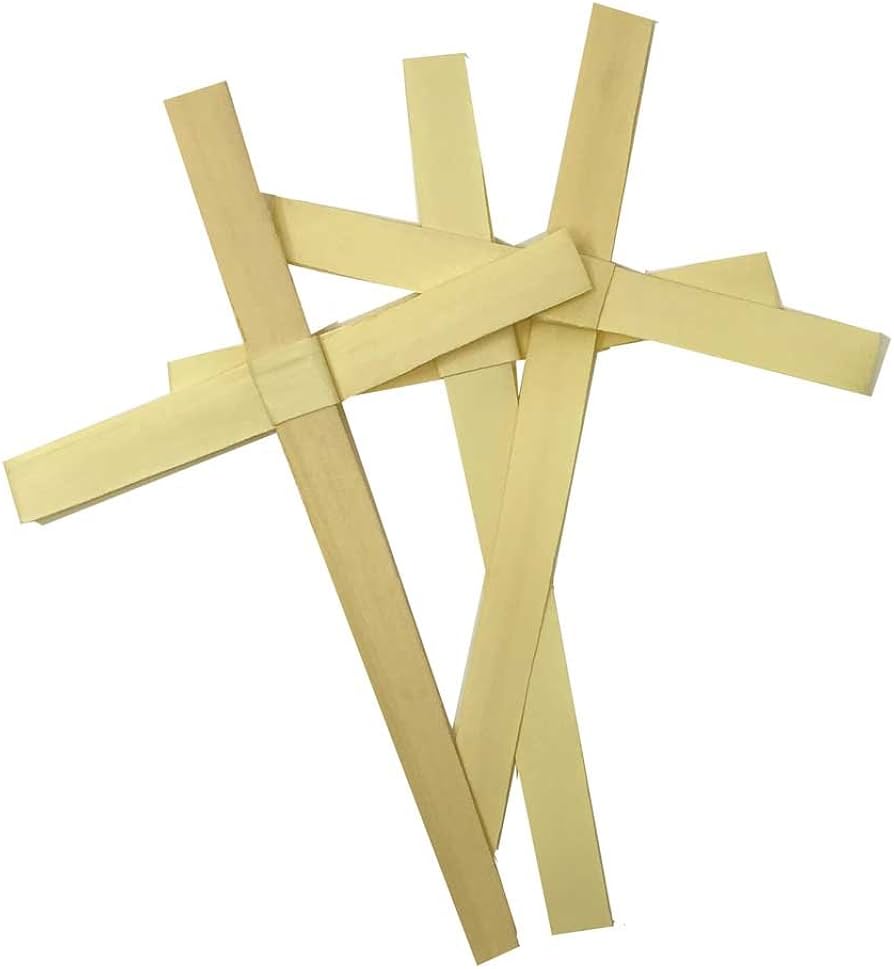
This reality is too much for many churches today, who have turned the event into a fluffy story about donkeys, palm leaves and the importance of Jesus.

But that importance, I suggest, can be really understood only its social and historical context. In marching through a city in a parody of an imperial procession, Jesus’ followers were claiming that it was Jesus, not the Roman Emperor, who was their real king.

This is significant: if we seek to serve the Kingdom of God, we will not be serving the kingdoms and powers of this world. Sadly, it’s a message that many churches are keen to avoid.

Admittedly, it requires a broad use of the term “riot” to ascribe that word to Palm Sunday – because this was a nonviolent protest, but no less disruptive and illegal for that.

Once we see that Jesus’ march into Jerusalem was a planned protest, certain confusing details in the gospels make a lot more sense. For years I was rather baffled by a part of the story, before the march begins, in which Jesus asks some of his disciples to go and fetch a colt that they would find tied to a door. If anyone asked them why they were taking the colt, they were to say, “The Lord needs it”. According to the gospels, when they said this, the people let them take the colt (Mark 11,1-6; also Matthew 21,1-3 and Luke 19, 29-34).

Why would they do such a thing? Surely the phrase wouldn’t make sense to people unless they were following Jesus. If that were the case, why not just talk more straightforwardly?

It all made a lot more sense when I realised that the collection of the colt was a pre-arranged event. The pyhrase “the Lord needs it” seems to have served as a sort of password, letting the people with the colt know that the people collecting the animal had indeed come from Jesus. An illegal protest cannnot be organised too openly.

Ched Myers, in his excellent book Binding the Strong Man, points to a number of similar instances in the text that probably arise from this sort of underground planning.

Later in the story, when Jesus is preparing for the Passover that will be his last meal before his arrest, he tells two of his disciples that they should follow “a man carrying a jar of water”. They are to follow him to a house, and they are to say a particular sentence to the people in the house, who will then show them to the right room (Mark 14,12-16).

But water-carrying was generally done by women. Myers suggests that a man carrying water would stand out, so that the disciples would know who to follow. Indeed, the idea of a man carrying water was sufficiently odd that Matthew, in his editing of Mark’s account, changed the description to “a certain man” (Matthew 26,18).

Historians and biblical scholars spend a lot of time and energy debating which of the stories in the New Testament are more or less likely to be historically accurate. The events of Palm Sunday (if not every detail of every story) tend to score highly. Early Christians were unlikely to have invented a story that made clear that Jesus was a threat to the vicious rulers of the Roman Empire under which they still lived.

Jesus led a dangerous and unlawful protest against the authorities – a reality that many churches have spent centuries trying to ignore.

Which British church leaders have backed calls for a ceasefire? And why haven’t the others?

A number of Christian leaders in Britain and Ireland have signed a Christian Aid statement calling for an immediate ceasefire in Palestine and Israel.

This is encouraging me, but what worries me is the number of names that are not on the list.

The Archbishops of Canterbury and York (the two most senior members of the Church of England) do not appear to have signed. Nor does the Catholic Archbishop of Westminster, who leads the Roman Catholic Church in England and Wales.

I am pleased to see that the leaders of the Church of Scotland, Methodists, United Reformed Church and Quakers have signed. As a member of a Baptist church, I am disappointed that the President of the Baptist Union of Great Britain does not appear on the list, although I am encouraged to see that the General Secretary of the Baptist Union of Wales has added her signature.

As usual when it comes to opposition to war, more church leaders in Scotland and Wales have signed up than church leaders in England.

Mark Strange, the Primus of the Scottish Episcopal Church (that is to say, the Anglican church in Scotland) has added his name, despite his English opposite numbers failing to do so. So has the Catholic Archbishop of Glasgow, William Nolan. They are joined – as already mentioned – by the Moderator of the General Assembly of the Church of Scotland, Sally Foster-Fulton, as well as the Scottish leaders of the Quakers and United Reformed Church.

When it comes to Wales, signatories include Jeff Williams, President of the Union of Welsh Independents (a Welsh-speaking Congregationalist denomination with a strong history of standing up for peace). He is joined by Judith Morris, General Secretary of the Baptist Union of Wales; by Mary Stallard, the Anglican Bishop of Llandaff, and by two Welsh Methodist leaders.

The only Irish signatories are two archbishops from the Anglican Church of Ireland, John McDowell and Michael Jackson.

Other signatories include representatives of Britain-wide denominations: Gill Newton and Kerry Scarlett, who are President and Vice-President of the Methodist Church in Britain; Tessa Henry-Robinson, Moderator of the General Assembly of the United Reformed Church; and Paul Parker, Recording Clerk of Quakers in Britain.

I am pleased to see that Mike Royal, a Pentecostal Bishop and General Secretary of Churches Together in England (a body about which I have not always been enthusiastic) has also signed the statement.

The remaining signatories are representatives of charities and campaigning groups, such as Cafod, the Amos Trust and the Fellowship of Reconciliation.

So what’s the reason for the missing signatories? I dare say some church leaders just didn’t get back to Christian Aid in time. I appreciate it must have been a rush to get the statement published.

But it is likely that others chose not to sign the statement. Justin Welby, the Archbishop of Canterbury, made headlines just after the Hamas attack on 7 October by calling for the protection of civilians in Gaza. Why will he not go further and call for a ceasefire? Now is the time for Christians to speak out against violence and especially against attacks on civilians – whoever is committing them.

You can sign Christian Aid’s statement yourself at https://www.christianaid.org.uk/get-involved/campaigns/emergencies/middle-east-crisis-action