You can tell when a march is big if you’re near the back of it. It you have to wait for hours before you even start moving, it’s a good sign that there are far more marchers than were expected.
The people at the front of yesterday’s Together Alliance march in central London reportedly reached the end of the route only shortly after those of us near the back had begun to march. Organisers estimated that half a million people had taken part.
There were people of many faiths and none, of many backgrounds, ages, nationalities, sexualities and genders; students, workers, unemployed people, young people and pensioners. There were trades unions, community organisations, faith groups and campaign networks.
We were united in rejecting the racism and hatred peddled by far-right groups such as Reform UK, Restore Britain and Unite the Kingdom. We were united for an inclusive, compassionate Britain in which resources are divided fairly and minorities are not scapegoated for the actions of billionaires and the consequences of unjust structures.
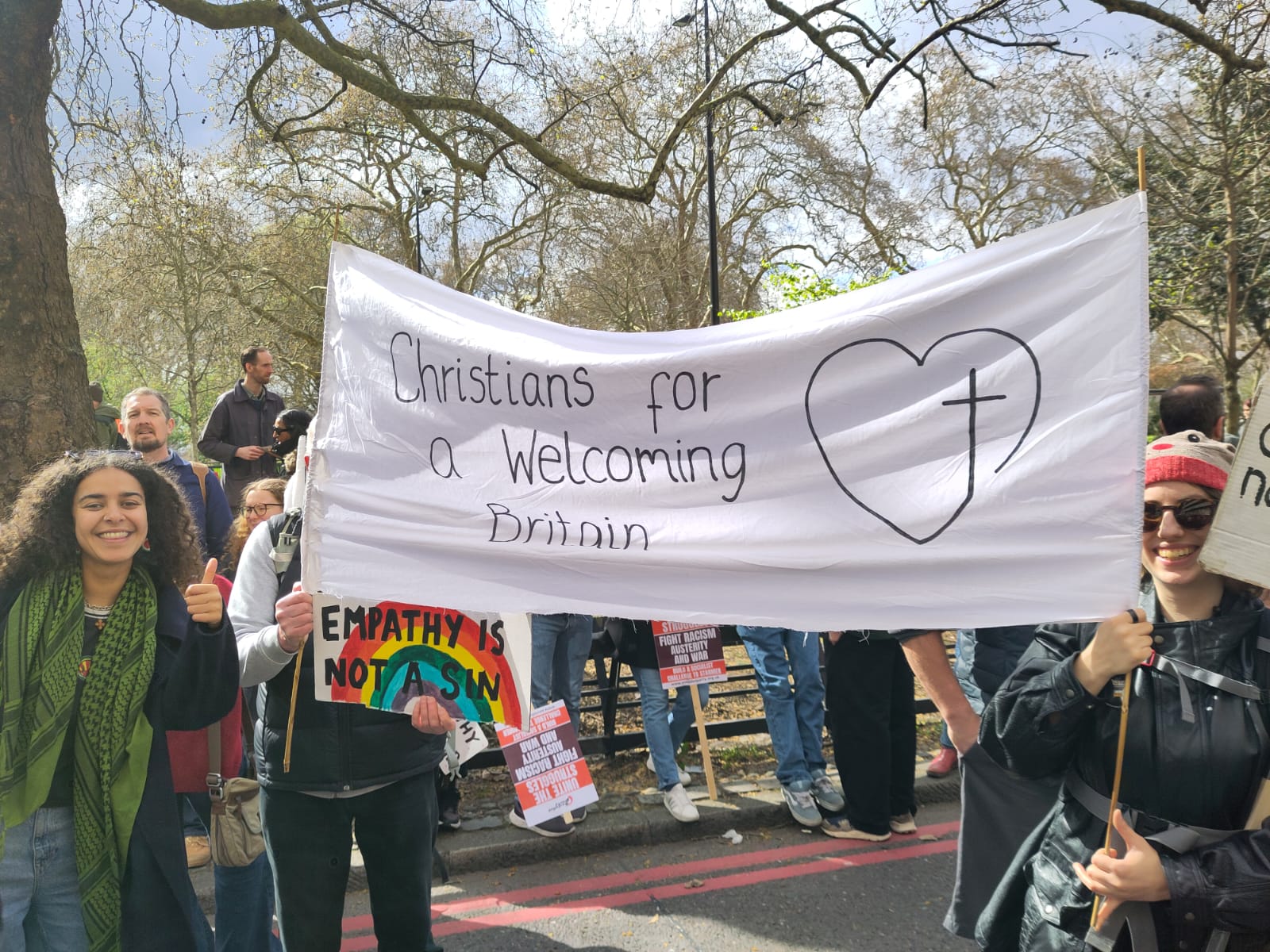
Amongst the many “blocs” (loosely organised sections) of the march was the Christian Bloc.
The point of the Christian Bloc was not to divide Christians from the other marches. That would undermine the unity that the march was championing! Rather, it was to the challenge the far-right’s attempts to co-opt Christianity. Christian nationalism has been increasingly visible in the UK in the last two years or so. Far-right figures claim to be defending “Christian Britain” as an excuse to demonise Muslims, Jews, LGBTQ+ people and others. We wanted to send a clear message that these people don’t speak for Christianity. There are many British Christians ready to stand in solidarity with our neighbours of other faiths and none.
When the idea of a Christian Bloc was first talked about, I thought we might get a few dozen people – perhaps over a hundred if things went well. A few days ago, organisers from groups including Better Story and Christians for a Welcoming Britain were suggesting there would be hundreds.
But I still hadn’t quite taken it in. When friends messaged me to say they would be in the Christian Bloc, I responded by saying “See you there!” – or similar words. Christian blocs at protests are usually small enough that if you know someone else who is going, you can be fairly sure that you will bump into each other. It hadn’t occurred to me that the Christian Bloc would be so big that I would simply not see many friends or acquaintances who were also there.
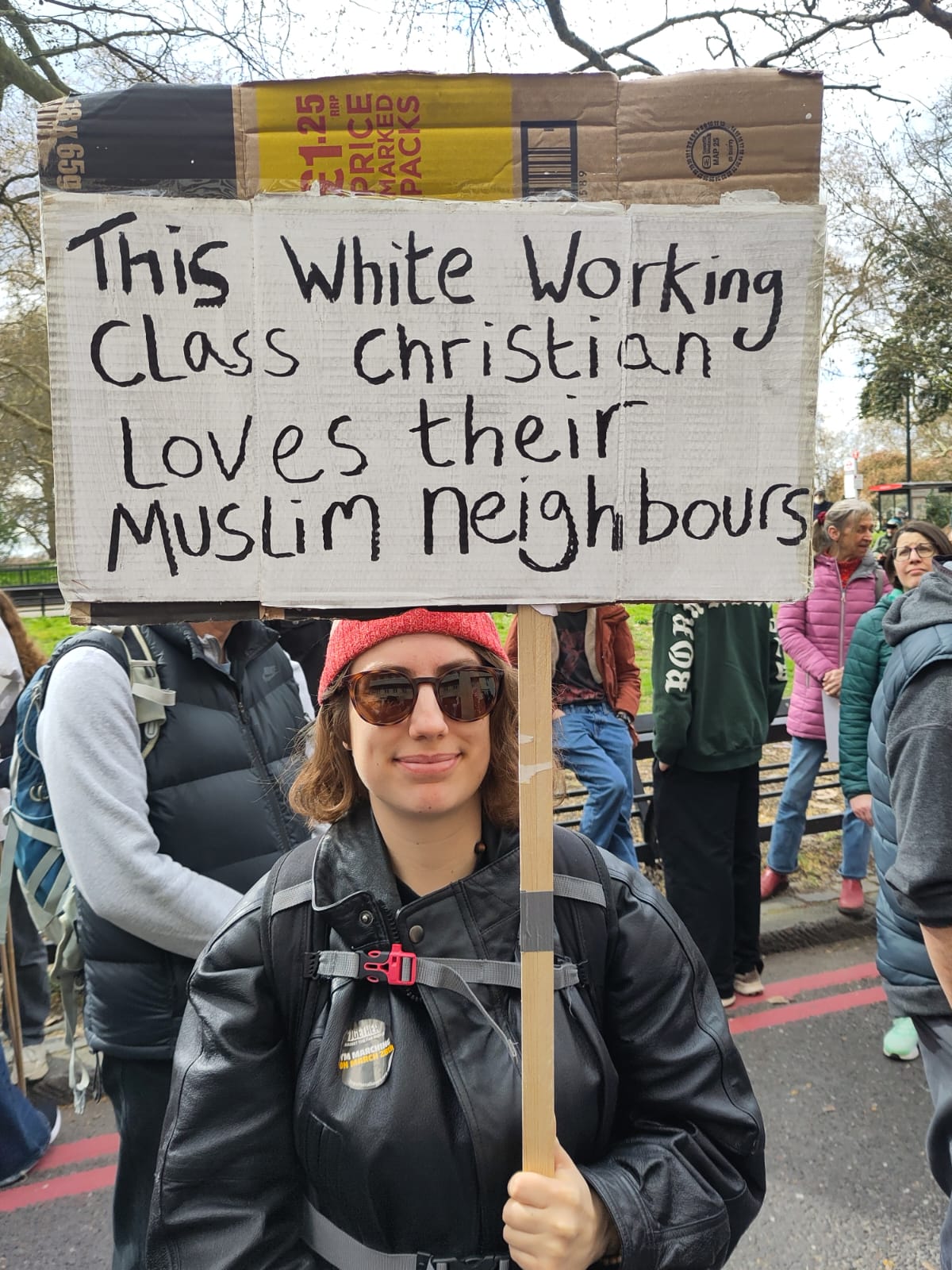
My first big surprise came when I arrived at Oasis Church Waterloo for the pre-march service. There were, by my admittedly rather rough estimate, about 400 people there. They were struggling to fit more people in. The numbers increased as the Christian Bloc assembled. As we marched down Piccadilly, the Guardian estimated that there were 1,000 people on the Christian Bloc alone.
We were not of course the only Christians on the march. I know that there were other Christians in the trade union blocs, the refugee blocs, the LGBTQ+ Bloc and elsewhere. They included some who had attended the church service before the march began. Nonetheless, I am delighted that so many joined a bloc that was specifically there to challenge the far-right’s misuse of Christianity and to reject Christian nationalism.
As the Christian Bloc marched, it was great to share greetings and encouragement with others, including Jewish and Muslim groups marching near us.
Well done and thank you to everyone who took part or expressed support!
Christian nationalism may be growing in the UK. So is the resistance to it. We need to keep going!


 Symon Hill