Reform’s Makerfield candidate is bearing false witness about “Christian heritage”

The Reform party’s candidate in the Makerfield by-election is misleading voters to whip up anti-Muslim feelings. He is misleading voters while claiming to defend Christianity.

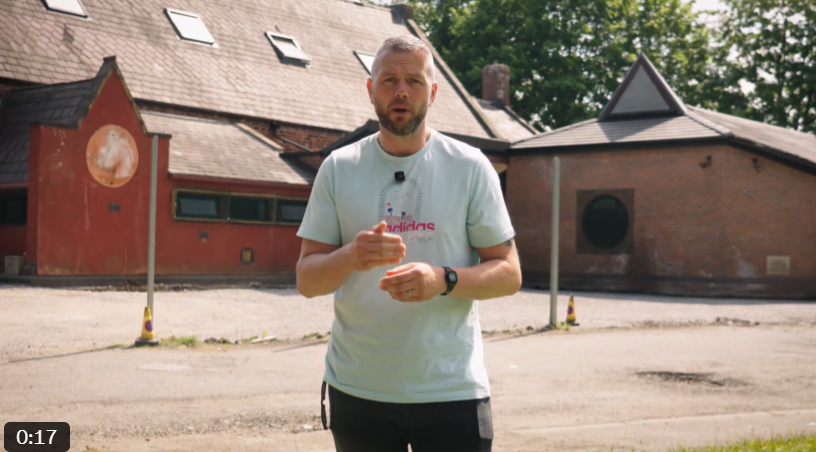
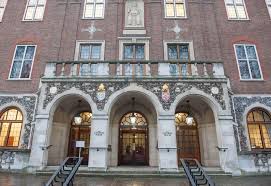
Robert Kenyon, who is hoping to beat Labour’s Andy Burnham on 18th June, posted a picture of himself on social media on Thursday (29th May) outside a building in the constituency. Alongside the image, he wrote:

“St Mary’s Church in Ince once served the people of Makerfield. Now it’s a mosque.

Our Christian heritage is being erased. Reform UK will ban the conversion of churches and protect Britain’s traditions.”

At best, Kenyon has failed to check basic facts about an important issue before commenting on it publicly. At worst, he has wilfully misled voters.

Some fairly basic research reveals that the building in question stopped being used by St Mary’s Church some years ago.

It is not and never has been a mosque. It is a building for the community that hosts a food bank and includes a prayer room used by Muslims. The food bank is open to local people of all faiths and none.

The Reform party – and other far-right groups – have recently been whipping up fears of churches being turned into mosques. The number of occasions on which this has happened in reality are tiny.

Yet by pushing the “churches-into-mosques” narrative, the far-right are fuelling the narrative that Islam is threatening and replacing Christianity. This of course is a thinly veiled way of suggesting that people of colour are a threat to white people.

Perhaps the nastiest part of Kenyon’s tweet is the framing of the first sentence:

“St Mary’s Church in Ince once served the people of Makerfield. Now it’s a mosque.”

St Mary’s Church used to serve the people of Makerfield says Kenyon. He then says, “Now it’s a mosque”.

Thus being a mosque is presented not simply as the opposite of being a church but as the opposite of serving the community.

This is nonsense. Many mosques, like many churches, serve their local communities, including people of other faiths and no faith. Of course, there are other mosques and churches that do less for their communities. But it is utter nonsense to claim that a church will serve the community but a mosque won’t.

As a Christian, I am disgusted by Reform UK’s misuse of Christianity. I know that many other Christians do too, although church leaders are often far too slow to speak out against the way that Reform UK – and others – are speaking about such things.

Reform UK and much of the rest of the far-right seem to think that Christianity is a synonym for Britishness, or at least white Britishness, and a very narrow form of white Britishness at that.

It is not. Following Jesus is at odds with Reform UK’s vicious hostility to refugees, their candidates’ refusal to repent of the harm they have caused, the demonisation of minorities and Kenyon’s vicious misogyny.

Being a Christian is not about standing in front of a community building that includes a Muslim prayer room and telling lies about it.  

Christians must speak out about anti-Semitism in churches

As a non-Jewish Christian, I have to be honest and speak out about the anti-Semitism that I have frequently witnessed in Christian churches. I wrote a comment piece about this issue for this week’s Church Times. The article is copied below.

It is much easier to condemn something if we think that we are not part of it. When it comes to anti-Semitism, churches have historically been part of the problem. Do we have the courage to admit that, in many ways, we still are?

Church leaders have rightly expressed horror at recent anti-Semitic violence in Britain. Other faith groups have made similar statements. As Rabbi Lev Taylor put it last month, “When Finchley Reform Synagogue was threatened . . . their local community came to uplift them. Mosques, churches, and community centres. The Lebanese community brought doughnuts. . . These people don’t hate us: they stand with us.”

Nonetheless, if responses from Christians are to carry weight, we must recognise that church teachings have for centuries played a major part in fuelling Jew-hate. The deep roots of Christian anti-Semitism are still bearing bad fruit today.

I spoke in a sermon last year of the need to support innocent people under attack, whatever their nationality or religion. Referring to suffering that I had witnessed in the West Bank, I made my opposition to Israeli occupation clear. Shaking hands after the service, I was shocked when two people made anti-Semitic comments.

One blamed “Jews” rather than Israeli authorities. The other talked about an unpleasant Jewish teacher whom she had known as a child. It took me a moment to work out why she thought this was connected to my sermon.

Another example that I could cite was someone making an anti-Semitic comment to a Jewish friend who accompanied me to church.

To learn about prejudice, we need to put the voices of those affected in the centre. Attempts to understand anti-Semitism must begin by listening to Jews. As a non-Jew, I have been hesitant to write about this. There is a danger that this hesitation becomes an excuse for not speaking out about the reality: that churches are the context in which I have most often witnessed anti-Semitism.

Jesus’s Jewishness is, thankfully, discussed much more widely nowadays, but anti-Semitism continues to infect sermons and hymns.

Take the Good Samaritan. Like me, you have probably heard preachers say that the priest and the Levite failed to help because they feared ritual uncleanliness. Discussing this passage with Jews, I find that this almost never comes up. They say that the need to save life takes precedence. I am sure that most of these preachers do not intend to promote anti-Semitism, but they unwittingly perpetuate an image of Jews as ritualistic and rule-obsessed. Some prejudices could be overcome simply by listening to members of the group about whom we are talking.

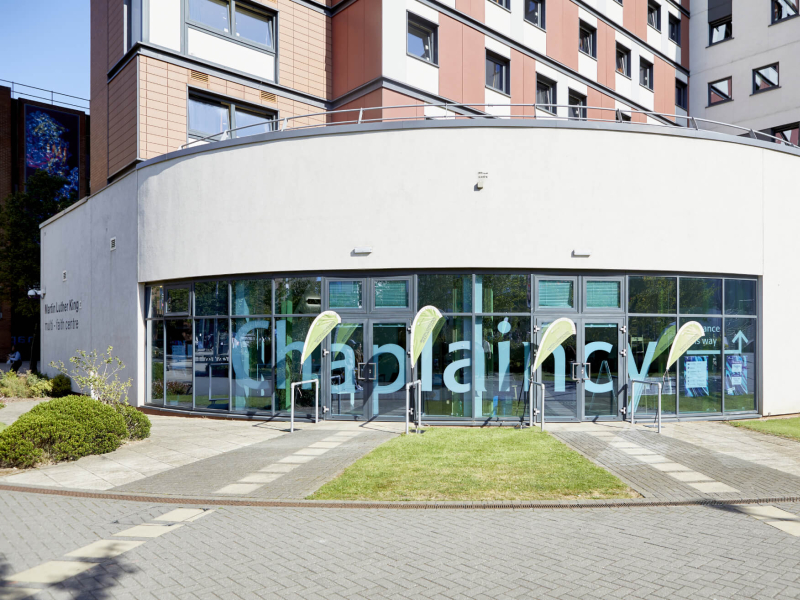
As a university chaplain, I witness students of varied faiths having difficult, but fulfilling, conversations about each other’s beliefs and assumptions. I fear that only a minority of churches readily engage in such dialogue.

One issue frequently mentioned by Jews in conversation with Christians is the much repeated — and harmfully inaccurate — claim that Jesus was crucified by “the Jews”.

The order to execute Jesus was given by the Roman Governor, Pontius Pilate. The situation is complicated by the Gospels’ emphasis on the guilt of Jewish leaders. But, as many biblical scholars point out, these were Jewish leaders who were collaborating with Rome. The High Priest held his position only with Roman approval. They were not representative of Jews as a whole.

To acknowledge that Jesus was killed by Roman imperial power is to recognise that he was a threat to the powerful. We cannot tackle anti-Semitism without engaging with complex issues of power, injustice, and structural sin.

Alongside recent anti-Semitic hate crimes, including the murders in Manchester and stabbings in London, there have been arson attacks on Muslim places of worship in Blackburn and Peacehaven. A Sikh woman in Walsall was raped by an Islamophobe who mistook her for a Muslim. There are, sadly, many more examples. To oppose such outrages effectively means speaking out against them all.

Of course, some have an interest in narrowing the issues. Anti-Semites, ludicrously, blame all Jews for Israeli violence in Palestine. The mirror image of this bigoted claim is seen in the Israeli government’s attempt to portray anyone who speaks of genocide in Gaza — even the United Nations and Amnesty International — as anti-Semitic.

A commitment to the value and dignity of all people leads many to oppose anti-Semitism and Hamas for the same reason that they campaign against Israeli atrocities. None the less, I am alive to the increasingly urgent need for anti-war campaigners to speak out much more clearly against the anti-Semitic attitudes that are found among a vocal minority within movements for Palestinian rights.

I cannot conscientiously do this if I do not speak also about anti-Semitism in churches. Christians are right to stand in solidarity with Jews in resisting anti-Semitism. To do so effectively, we must — to quote a famous Jew — cast the plank out of our own eye.

_________________________________________________________________________________________________________

Symon Hill’s books include The Upside-Down Bible: What Jesus really said about money, sex and violence (Darton, Longman and Todd, 2015)

University chaplaincies under threat

I wrote this article for the Church Times, who published it on 24th April 2026.

If you took your lead from the more disheartening corners of social media, you might think that humans could never get on with people different from themselves. I am lucky to have regular reminders that this is untrue — because I work in a university chaplaincy.

This really hit me after the far-right riots of summer 2024. That September, students of many backgrounds, faiths, and nationalities turned up at our university and undermined all the far-right’s myths in the first week of term.

One day that week, in the chaplaincy, I saw a student in a kippah and a student in a hijab chatting about the differences between halal and kosher. The next day, a student with colourful hair and revealing clothes sat alone at a board games event before a group of conservatively dressed Muslim women invited her to join their game.

At our weekly philosophical discussion group, I have watched students with passionately different views on the British Empire restrain themselves from interrupting as they listened to one another. Members of a generation routinely patronised in the media show a greater ability at dialogue than politicians three times their age.

Several academic studies show that Christian chaplains in higher education (HE) still outnumber chaplains of other faiths put together, but the numerical dominance is declining. There seems to have been a particular buzz around Muslim chaplaincy recently, with new books, conferences, and courses.

Christians have nothing to fear from multifaith chaplaincy: following Christ surely leads us to serve our neighbours of all faiths and none. Some students who come to our chaplaincy seek reassurance that our purpose is not to convert them. When we focus, instead, on meeting their needs, they are left with a much better impression of Christianity; and some end up asking about Christian faith.

The Revd Dr Jenny Morgans, an Anglican chaplain at King’s College, London, and author of Christian Women at University, reports that “chaplaincies particularly serve students experiencing isolation, including international students and LGBTQIA+ students, who may feel marginalised in other religious spaces”.

This echoes my experience. I am asked about Jesus and faith by students who would be unlikely to go to church — including some who would be afraid to do so — to ask such questions. Yet, I know one senior church leader who advocated withdrawing chaplaincy funding because it did not result in more people turning up at his churches.

The threat to Christian chaplaincy in HE does not come from Muslim, Jewish, or Humanist chaplaincy: it comes from university funding decisions — and from attitudes in churches.

Since the HE sector is facing funding problems, axing chaplaincy budgets can seem — to the sort of university managers who cannot fit pastoral care into a spreadsheet — a quick way to save a few pounds. But not all chaplains are funded by universities themselves. Traditionally, about half of the funding for Christian chaplains comes from churches. Some of that money is drying up.

It is not easy to find up-to-date statistics: several denominations are astonishingly bad at providing them. Go to a gathering of HE chaplains, however, and you will find that the mood of enthusiasm for our work is marred by a thread of sadness about cuts and under-appreciation.

The funding picture is varied, but some trends are visible. While academic research is inevitably a few years behind, experience suggests that it is no longer as unusual as it was in England to find a university without an Anglican chaplain.

Having spoken with several chaplains who are wrestling with funding negotiations, I do not want to put their chances in jeopardy by naming specific universities; but the examples are not hard to find.

The withdrawal of denominational funding can happen quickly and have significant consequences. A recent Roman Catholic decision to scrap the funding for both RC chaplains at a large redbrick university left the university’s chaplaincy team almost halved, putting significant strain on the other chaplains.

In the Midlands, meanwhile, an informal deal between the Methodists, Baptists, and United Reformed Church has broken down. There was a “gentlemen’s agreement” about which denomination would fund a Free Church chaplaincy post at which universities. But, as new people in each denomination faced pressure over budgets, they did not feel bound by a deal that sounded as though it had been written on the back of an envelope in a pub two decades before.

There need to be more than clearer structures and accountability, however: there need to be changes in culture so that chaplaincy is truly valued. Churches can learn from chaplaincies, and so can the world as a whole.

It is not true that difference must lead to prejudice, and disagreement must lead to hatred. It is true that God has created human beings different from one another and yet able to live and learn together. Many university chaplaincies testify to this truth through their everyday work. It is work that churches can do much more to support.

_________________________________________________________________________________________________________

Symon Hill is a Baptist chaplain at a university in the West Midlands. His books include The Upside-Down Bible: What Jesus really said about money, sex and violence (Darton, Longman and Todd, 2015).

1,000-strong Christian Bloc joins Together Alliance march against the far-right

You can tell when a march is big if you’re near the back of it. It you have to wait for hours before you even start moving, it’s a good sign that there are far more marchers than were expected.

The people at the front of yesterday’s Together Alliance march in central London reportedly reached the end of the route only shortly after those of us near the back had begun to march. Organisers estimated that half a million people had taken part.

There were people of many faiths and none, of many backgrounds, ages, nationalities, sexualities and genders; students, workers, unemployed people, young people and pensioners. There were trades unions, community organisations, faith groups and campaign networks.

We were united in rejecting the racism and hatred peddled by far-right groups such as Reform UK, Restore Britain and Unite the Kingdom. We were united for an inclusive, compassionate Britain in which resources are divided fairly and minorities are not scapegoated for the actions of billionaires and the consequences of unjust structures.

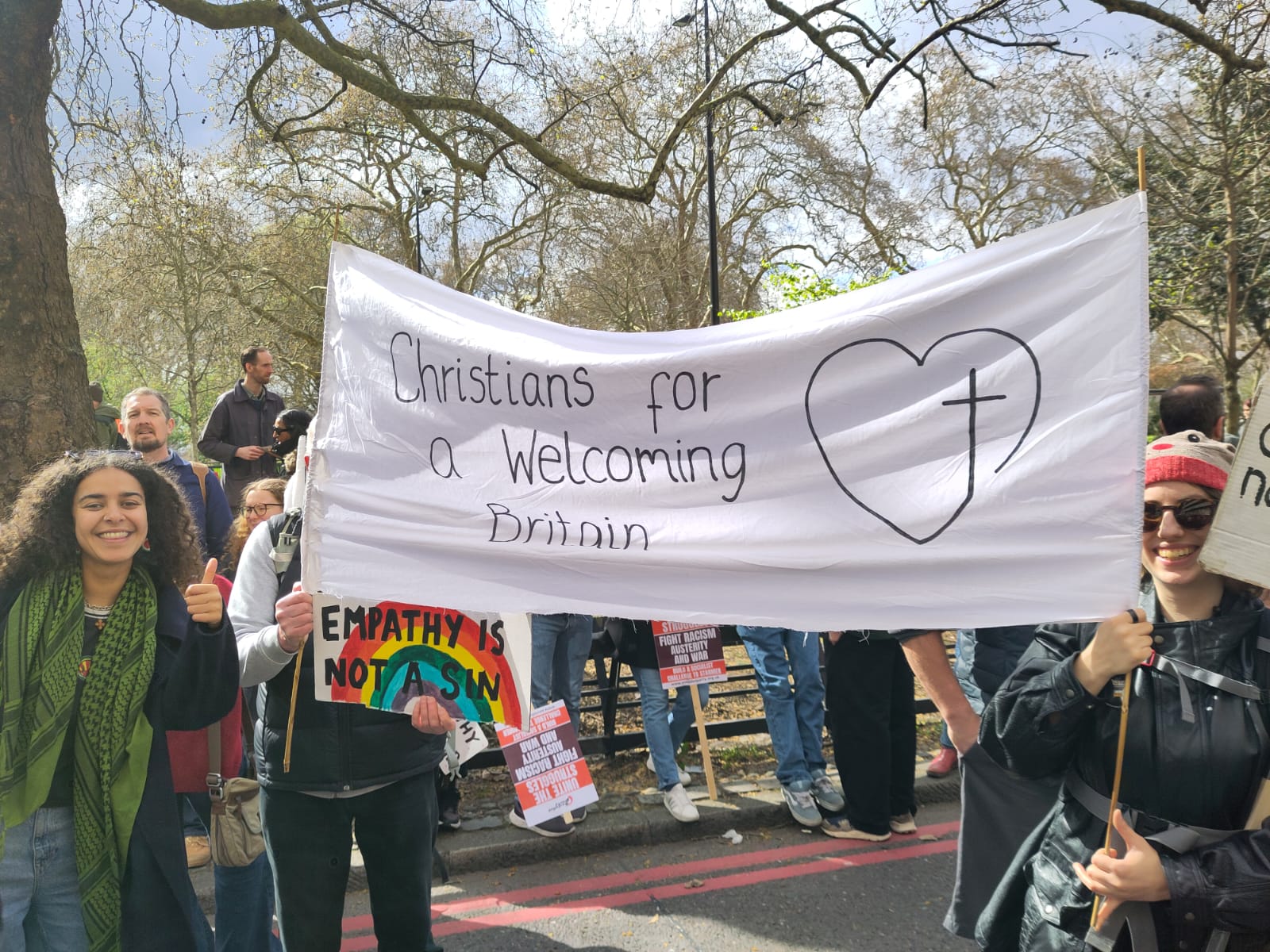
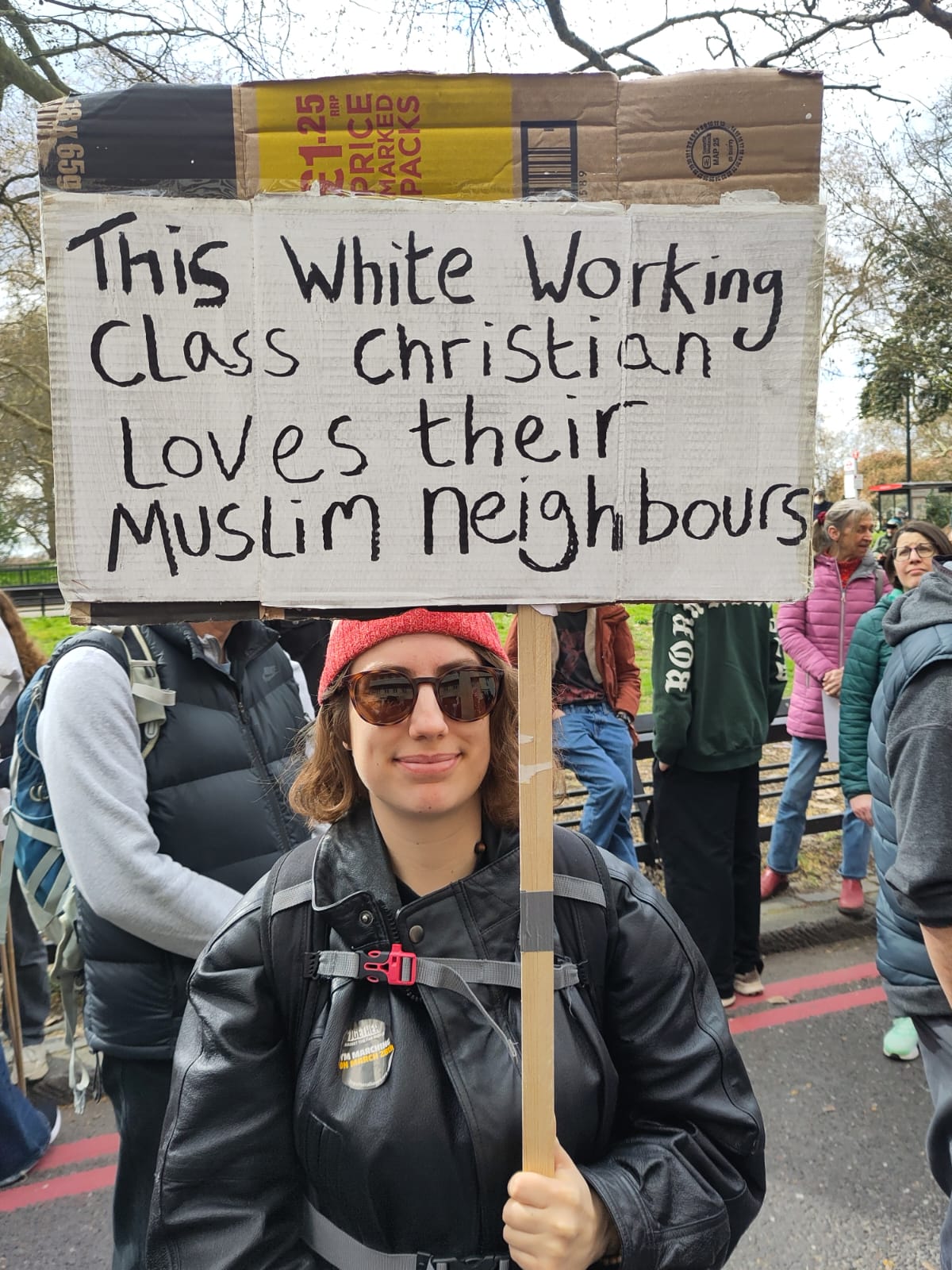
Amongst the many “blocs” (loosely organised sections) of the march was the Christian Bloc.

The point of the Christian Bloc was not to divide Christians from the other marches. That would undermine the unity that the march was championing! Rather, it was to the challenge the far-right’s attempts to co-opt Christianity. Christian nationalism has been increasingly visible in the UK in the last two years or so. Far-right figures claim to be defending “Christian Britain” as an excuse to demonise Muslims, Jews, LGBTQ+ people and others. We wanted to send a clear message that these people don’t speak for Christianity. There are many British Christians ready to stand in solidarity with our neighbours of other faiths and none.

When the idea of a Christian Bloc was first talked about, I thought we might get a few dozen people – perhaps over a hundred if things went well. A few days ago, organisers from groups including Better Story and Christians for a Welcoming Britain were suggesting there would be hundreds.

But I still hadn’t quite taken it in. When friends messaged me to say they would be in the Christian Bloc, I responded by saying “See you there!” – or similar words. Christian blocs at protests are usually small enough that if you know someone else who is going, you can be fairly sure that you will bump into each other. It hadn’t occurred to me that the Christian Bloc would be so big that I would simply not see many friends or acquaintances who were also there.

My first big surprise came when I arrived at Oasis Church Waterloo for the pre-march service. There were, by my admittedly rather rough estimate, about 400 people there. They were struggling to fit more people in. The numbers increased as the Christian Bloc assembled. As we marched down Piccadilly, the Guardian estimated that there were 1,000 people on the Christian Bloc alone.

We were not of course the only Christians on the march. I know that there were other Christians in the trade union blocs, the refugee blocs, the LGBTQ+ Bloc and elsewhere. They included some who had attended the church service before the march began. Nonetheless, I am delighted that so many joined a bloc that was specifically there to challenge the far-right’s misuse of Christianity and to reject Christian nationalism.

As the Christian Bloc marched, it was great to share greetings and encouragement with others, including Jewish and Muslim groups marching near us.

Well done and thank you to everyone who took part or expressed support!

Christian nationalism may be growing in the UK. So is the resistance to it. We need to keep going!

Church House Westminster are legitimising the far-right

A prominent London conference centre linked to the Church of England has been hosting the far-right political party Reform UK.

This is Church House Westminster, previously known as the Church House Conference Centre.

If this sounds familiar, it is because this is the same Church House Westminster that drew protests over several years for hosting military conferences sponsored by arms companies. I was arrested outside Church House in 2017 as the Land Warfare Conference took place inside.

At that point, Church House Westminster came out with the disingenuous excuse that they are a separate legal entity from the Church of England. They are making the same assertion now when challenged about hosting Nigel Farage’s far-right Reform party.

On 2nd March, the chief executive of Church House Corporation, Stephanie Maurel, said that Church House Westminster was “an independent commercial entity and is not part of the Church of England”.

This is a legal technicality. Church House Westminster is a wholly owned subsidiary company of the Church House Corporation. This legal technicality does not explain why the Christians who run it think they should operate by different ethics than they would bring to an entity that was officially part of the Church of England.

Church House Westminster’s own Lettings Policy seems to contradict their statement about being an independent entity. It states that they may “refuse any bookings which would be contrary to the witness and mission of the Church of England”.

After the controversy over the arms industry conferences, Church House Westminster took the bizarre and frankly ridiculous step of hiring Oliver O’Donovan to carry out a review of the ethics of their lettings policy. O’Donovan is Emeritus Professor of Christian Ethics and Practical Theology at the University of Edinburgh. He is one of Britain’s most prominent Christian ethicists.

The commissioning of O’Donovan’s review was not a sign of progress. It was a sign of the appalling attitudes of the people running Church House Westminster. Who needs a Professor of Ethics to determine whether a Christian conference centre should take money from companies that sell weapons to tyrants?

To add an extra level of absurdity, the results of O’Donovan’s review were not made public.

Church House Westminster have allowed Reform UK to use the building for their press conferences multiple times, including the recent announcement of the party’s “shadow cabinet”.

Farage and his cronies repeatedly claim that Reform is not a far-right party, despite their constant demonisation of refugees in particular and migrants in general, as well as attacks by many of their politicians on Muslims, LGBTQ+ people, disabled people, benefit recipients and other minorities. The rich and powerful are almost the only minority that Reform UK don’t attack.

Church House has been urged not to host Reform UK by groups including Christians For a Welcoming Britain, Christians Against the Far Right, and Better Story.

Keith Brindle, a Church of England priest and co-ordinator of Christians Against the Far Right, has said, “By opening its doors to an agenda of hostility, Church House has provided a veneer of spiritual legitimacy to Reform’s anti-migrant and anti-Muslim politics, and their cynical scapegoating.”

He added, “As followers of Jesus, we must refuse to let the architecture of our faith be used to endorse the dehumanisation of our neighbours. The Church must be a sanctuary for the displaced, not a platform for their expulsion.”

Going on their past behaviour, it is likely that the authorities at Church House are planning simply to ignore the controversy and carry on. We need to make sure that that they can’t.

Why is a Christian church hosting a far-right party?

Why is a Christian church hosting a far-right party’s conference?

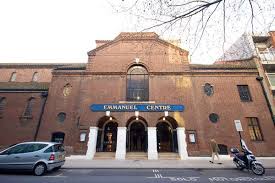
The Emmanuel Centre, part of Emmanuel Church in Westminster, is today the venue for a major event run by Advance UK.

The Centre has so far failed to respond to concerned Christians and journalists who have asked why they are prepared to profit from hosting a racist party.

If you’re not familiar with Advance UK, they split from the far-right Reform UK, in part because they seemed to regard them as too soft and not right-wing enough. The main figure associated with Advance UK is Ben Habib, a former senior figure in Reform who fell out with Nigel Farage and went off to set up his own party.

Other Advance UK members include Rikki Doolan, a far-right Christian minister best known for his role in the reported conversion to Christianity of racist activist Tommy Robinson.

I cannot of course see into the hearts of Robinson and Doolan. It is not for me to judge the sincerity of their faith. What I can say is that I see no connection between the views they promote and the teachings of Jesus.

Doolan spoke at Robinson’s far-right “carol service” in London in December. He repeatedly attacks Muslims, refugees and LGBTQ+ people.

Meanwhile, you only have to look fairly briefly at Advance UK’s social media stream to see claims about refugees that can easily be demonstrated to be factually untrue. They confuse asylum-seekers with “illegal immigrants”, even though claiming asylum is entirely lawful and an internationally recognised human right.

As with most far-right parties, the one minority who they don’t attack is the rich and powerful.

Racism, deceit and demonisation of minorities are clearly at odds with the most basic aspects of Jesus’ teaching. Like many other Christians, I often fail to live up to the values that I believe in. I am not expecting all Christians to agree with me. The far-right’s misuse of Christianity, however, is a fundamental distortion of the Gospel. The Gospel of Jesus tears down barriers and upholds the value of all people, while the Bible is full of calls to welcome migrants and other people who are marginalised.

As a Christian, I believe in loving my enemies. I am not suggesting that members of Advance UK should be barred from churches. There is a big difference, however, between welcoming people as individuals (while also challenging them) and using your church to promote a party and their policies.

So why did the Emmanuel Centre think it was acceptable to host this party’s conference?

It won’t wash to say that Advance UK were simply booking a room in a conference centre. Most churches (and many other venues), have ethical lettings policies setting out who they will and won’t rent rooms too. It is inconceivable that a major conference centre in central London has given no thought to the question of who may be barred from hiring space there.

Even if they had allowed the Advance UK booking through naivety or incompetence, they have received emails and messages in recent days from a number of Christians expressing their alarm. Thus, while it’s hard to believe that the Emmanuel Centre’s managers were ignorant of the reality of Advance UK, it is literally impossible to believe that they still are.

The Emmanuel Centre urgently need to:

  • Explain how they came to host Advance UK’s conference.
  • Rule out hosting them in future.
  • Publish their lettings policy and rule out all bookings by far-right groups.

At a time when the far-right is on the march, it is vital that Christians work with people of other faiths and none to resist fascism and racism. Far from resisting far-right groups, Emmanuel Church are promoting and profiting from them.

If you want to urge the Emmanuel Centre not to host the far-right again, you can contact them at enquiries@emmanuelcentre.com or on 020 7222 9191.

Don’t let the far-right steal Christmas

I wrote an article for yesterday’s Morning Star, encouraging readers of all faiths and none to challenge the far-right’s attempts to co-opt Christmas and Christianity to promote values that are utterly at odds with the teachings and example of Jesus.

You can read the article on the Morning Star website, but it is also reproduced below.


Britain’s best-known fascist is angry about Christmas trees.

Tommy Robinson, also known by his original name of Stephen Yaxley-Lennon, has denounced Tesco for selling plastic trees as “evergreen trees.” He insists they should use the word “Christmas.”

Robinson and his followers have been ridiculed by people suggesting that the far right are too stupid to recognise Christmas tree unless they are labelled. But while Robinson is a nasty racist bigot, he’s not stupid. He’s clever, manipulative, and knows exactly what he is doing.

In this case, he is jumping into the annual Christmas culture wars. Every year, there are people who complain about local councils using expressions such as “winter lights” or “festive markets” without the word “Christmas.”

Speaking as a Christian, I think the birth of Jesus is more important than the name that corporations give to plastic trees. Many Christians find the controversy ridiculous. Sadly some other Christians get swept up in the outrage.

These are the people who the far right are trying to recruit. They insist that Britain is a “Christian country” and that British people must observe Christmas.

In reality, nobody is trying to stop them putting up Christmas trees (a German tradition), promoting Santa Claus (based on a Turkish bishop) or celebrating the birth of Jesus (a Middle Eastern refugee).

While the British far right often claim to defend “Christian Britain,” there has been a significant shift recently. At least three things have changed.

Firstly, far-right figures are focusing more on Christianity. This may be due to Robinson’s reported conversion in prison. I can’t read his mind, so have no idea whether he genuinely had a conversion experience. It seems, however, that he doesn’t think that turning to Christ requires him to repent of racism and violence.

Secondly, a handful of far-right clergy are making themselves more visible in working with Robinson at anti-migration protests.

Thirdly, it is increasingly clear that far-right groups are not only nominally pro-Christian but that a minority of their members are active churchgoers, some in mainstream denominations.

Far-right leaders hope to see movement in the other direction also. They want to draw Christians to their cause. Some are using slick, subtle and deceptive advertising to try to draw them in.

This Saturday, an event will take place in Whitehall called “Putting Christ Back Into Christmas.” It will involve carols and prayers and is organised by “Unite the Kingdom.”

It was Unite the Kingdom – whose aim is to divide the kingdom – who organised the far-right rally in London back in September, with speakers including Tommy Robinson, along with Elon Musk by video link. Musk – who is funding Robinson’s legal fees – said “violence is coming” and urged his listeners to “fight back.”

Other speakers included Brian Tamaki, a right-wing Christian preacher who called for all non-Christian religions to be banned.

None of this would be apparent to the casual observer of the carefully constructed video made to promote this supposedly innocuous Christmas carol event on Saturday.

The video begins with a cheery hello from Christian minister Rikki Doolan, who witnessed Robinson’s conversion in prison. The video does not mention that Doolan is an Islamophobic conspiracy theorist who belongs to the far-right Advance UK party.

A homely scene features a smiling Canon Phil Harris in a jumper and clerical collar. Many viewers will have no idea that Harris is an out-and-out racist who claims that Britain is being “overrun” by migrants who “seek to subdue us.” During the racist riots of 2024, Harris described the rioters as “concerned citizens.”

Only after a succession of people with crosses and clerical collars does Tommy Robinson appear. His name is not given.

The first hint that this is about nationalism is when far-right Pentecostal pastor Chris Wickland declares that this is “a moment for believers, families and patriots.” It is then stated that the event is organised by “Unite the Kingdom” – but not everyone will know what this means. It is quite possible for someone to watch this video without realising that this will be a far-right event.

It is vital that we expose the reality.

Thankfully, a number of left-wing Christians are committed to being present in central London on Saturday to make sure that a very different message is heard.

There will be various nonviolent events to challenge fascism, involving people of many faiths and none.

It is likely, however, that local far-right groups in various parts of Britain will try to misuse Christmas and Christianity to push their vile agenda. If your local anti-racist group, or union branch, or student society or other group is resisting this sort of thing, I suggest contacting local churches – and other faith groups – and asking them to join you in speaking out against it.

Whatever you make of Christianity, the New Testament tells the story of Jesus, who became a refugee as a child, who grew up to side with the marginalised, challenge the powerful, proclaim love for all and get executed as a rebel by the brutal Roman empire. Whether or not you believe he was resurrected, it is clear that his life and message are the opposite of the far-right’s pseudo-gospel of hate. Now is the time to say so. 

_______________________________________________________________________________________________________________

My book, The Upside-Down Bible: What Jesus really said about money, sex and violence (Darton, Longman and Todd, 2015) can be bought in paperback or e-book, priced £9.99.

Make sure no-one’s fooled by the far-right’s Christmas event

Well done to the Church of England, who have sharply criticised Tommy Robinson’s far-right Christmas-themed event planned for London this coming Saturday.

I was getting a bit frustrated with the CofE for their failure to condemn the event sooner, but I’ll happily put that aside and focus on the fact that they have done so now. In the case of some CofE leaders, they have done so more strongly than I had dared to hope.

The Baptist Union of Great Britain, the Methodist Church and the United Reformed Church had already condemned Robinson’s plans, along with various other churches and Christian groups.

Some Christians would prefer just to ignore the far right. I understand about denying them the “oxygen of publicity”. The problem is that if they’re already getting publicity for the lies they tell, we need publicise the truth.

Robinson’s and his band of far-right clergy have put out a slick and sophisticated video and social media posts. The video includes a handful of racist and homophobic clergy, mostly from tiny right-wing denominations. They claim that this event is “not political”. They clearly want to give the impression that this is an innocuous Christmas carol event.

Their propaganda seems to be working. I have been saddened and disturbed to read posts in Christian Facebooks groups from people either approving of Robinson’s rally or urging people not to condemn it. Some of these are not from out-and-out racists; some are even from people who might be considered theologically progressive.

The far right event is called “Putting Christ Back Into Christmas” and involves carols and worship in Whitehall on Saturday. It is organised by “Unite the Kingdom” (UTK), whose aim is to divide the kingdom. This is the group who organised the racist rally in London in September, which included violent assaults on people of colour and peaceful counter-protesters.

For resisting the far-right’s narrative, and for reaching out to people who are taken in by UTK’s claims about the nature of the event, there are some helpful resources out there:

  • The Centre for the Study of the Bible and Violence have collated a range of resources – from artworks to writings to discussion materials.
  • The Joint Public Issues Team – who represent the Baptist Union, Methodist Church and United Reformed Church – have links to various resources on their website.
  • Jon Kuhrt has written a helpful article contrasting the organisers’ claims about the event with Robinson’s description of it to his own supporters.
  • There will be some alternative acts of worship on the day, not all of which can be publicised in advance. Please let me know if you are interested in details (although I don’t know about all of them!).
  • There is a counter-demonstration for people of all faiths and none at Downing Street from 1pm on Saturday.

________________________________________________________________________________________________________________The above image of the Bus Stop Nativity is produced by Andrew Gadd, who is kindly allowing it to be reproduced for free.

I’m a Christian, and I don’t give a toss what Tesco call their trees

Some people are getting very angry with Tesco for calling their Christmas trees “evergreen trees”. The usual claims of “they’re banning Christmas” are especially loud this year, backed not only by the usual culture warriors but by full-on violent far-right figures such as Tommy Robinson.

In a year that has seen the far-right advance further in the UK than at any time for decades, they’re making big claims about defending Christianity. They are backed by a handful of far-right clergy, mostly in tiny denominations, and unintentionally helped along by a greater number of clergy and churches who are dithering about how to respond.

As well as talking endlessly on social media about Christmas trees, the far-right are trying to drum up Christian support by getting angry about Christmas markets being called “festive markets” and local councils putting up “winter lights”.

Culture warriors and right-wing nationalists say that people are trying to “ban” Christmas. In reality, nobody is doing anything to stop them using Christmas Trees (derived from a German practice) or traditions of Santa Claus (based on a Turkish saint) to celebrate the birth of Jesus (a Middle Eastern refugee). With no sense of irony, they will do all this to show how British they are.

It is not the name changes, but the people who jump to criticise them, who are trivialising Christmas.

I celebrate the birth of Jesus because it is about things far more important, exciting and life-changing than what what a corporation call their plastic trees.

There will be hundreds of people sleeping rough in unbearably cold weather on Christmas night. There will be many, many more freezing indoors because they can’t afford the heating, while others remain on seemingly endless waiting lists for physical and mental health needs. And that’s just in the UK. Might Jesus not be more concerned about meeting these people’s needs than about whether celebratory trees bear his name?

If you go on Twitter (or “X”), it quickly becomes clear that the far-right’s love of Christmas trees is less about supporting Christians and more about attacking people of other faiths, particularly Muslims. They claim that Tesco and local councils are avoiding the word “Christmas” so as not to “offend” Muslims. I don’t know how many Muslims these people actually speak to, because in reality it would be quite hard to find many – or any – Muslims in the UK who are offended by Christians celebrating Christmas, let alone people who want to “ban” them from doing so.

It is easy to laugh at the far-right’s absurdity. Indeed, sometimes I do. But we are in danger of overlooking a serious threat. Far-right rhetoric has become mainstream in the last year in ways that some of us could not have imagined. With Reform UK leading in the opinion polls and a Labour government pandering to their rhetoric, this is not the time for churches to faff about.

Neutrality in the face of injustice is no part of the calling of a Christian. We must speak out firmly against the far-right’s claim to be defending “Christian” Britain. We must uphold the value and dignity of all human beings as central to what the New Testament, and Christian discipleship, are all about.

If churches don’t act clearly and strongly against the threat, the far-right will advance further. And they will advance in British churches.

There is a lot of talk about “listening” to the concerns of far-right protesters and so on. Of course Christians should listen to everyone. That does not mean we should be neutral about them. We need to listen and challenge. We should be open to challenge ourselves of course. That is no excuse for inaction.

Ironically, it is within Christian teaching that we find the very means to resist people while also listening to them and not hating them. Jesus taught the love of enemies. Paul and other New Testament writers also taught the love of enemies. The love of enemies is central to Christian ethics. It is odd how rarely we talk about it in most churches.

The love of enemies does not mean having no enemies.

Racists are our enemies. Fascists are our enemies. We are called to love them. We are called to see the image of God in them and recognise them as equal human beings. And we are called to stand against them, oppose and speak out against all that they stand for. Love is not neutrality. Love is not passivity. Love is a refusal to descend to the level of those who preach hatred.

Middle class Christians sometimes talk unhelpfully about far-right protesters’ “legitimate concerns”. They often mean concerns around housing, NHS funding and so on, which the far-right blame on migrants. Of course it is right to be concerned about such things. It is not remotely legitimate to blame migrants for them. We need not only to listen to the concerns but to challenge the narrative that the concerns are misused to justify.

I suspect that many far-right leaders know that migration is not the cause of these problems, even if their foot-soldiers have been fooled. Instead of legitimising the far-right’s arguments, we need to put forward a bold alternative vision that champions the rights of migrants and people born in Britain to decent housing and healthcare and public services. These problems are caused not by migration but by inequality and sinful economic structures.

As Christians, let us speak up for the Christ who championed the poor and marginalised, urged the rich to repent, resisted unjust systems and broke down barriers that divided people based on nationality or prejudice.

This is the Christ we need to proclaim loudly at Christmas. This call for love and justice is what Christmas should be about – not the names of commercial trees.

________________________________________________________________________________________________________________

My book, The Upside-Down Bible: What Jesus really said about money, sex and violence (Darton, Longman and Todd, 2015) can be bought in paperback or e-book, priced £9.99.

Ant Middleton wants a leader with ‘Christian values’- but Christian values are the opposite of his far-right nationalism

I recently wrote an article for Premier Christianity in response to Ant Middleton’s claim that he wants to defend “Christian values” as a candidate for Mayor of London. They published it in on 18th August. Below is a slightly extended version of the article.

As followers of Jesus, we are taught to be “wise as serpents and innocent as doves” (Matthew 10:16).

I am alarmed therefore by how many Christians are cheering politicians who promise to protect “Christian values”. We should not be so naïve as to welcome such comments without asking what is meant by them.

Celebrity and ex-SAS soldier Ant Middleton recently posted on X: “Our Capital City of our Christian country needs to be run by a native Brit with generational Christian values, principles and morals coursing through their veins”.

But what does he mean by “generational Christian values”? Following Jesus is not hereditary. It is a personal choice, albeit with major implications for society. Middleton also argued that only people born in the UK, and whose parents and grandparents were born in the UK, should hold “top tier government positions”. He may have overlooked the fact that this would rule out several former prime ministers, including Winston Churchill.

To attack a political opponent on grounds of ethnicity is to undermine the Christian values that Middleton claims to defend

Middleton made the above remarks amid an announcement that he planned to stand in the 2028 London mayoral elections. He was initially tipped to be the Reform UK candidate, but recently announced that he would stand as an independent to defend “British culture”. In his post, Middleton took aim at current Mayor of London, Sadiq Khan. Whatever we might think about Khan’s policies, the birthplace of his parents should be irrelevant.

Breaking down the divide

I cannot see into Middleton’s heart or question the sincerity of his faith. Only God sees into his heart, just as only God sees into my heart or yours. I can, however, say that his comments seem utterly incompatible with Jesus’ teachings.

Jesus broke down hostility between Jews and Samaritans, and Jews and Gentiles. The New Testament is full of challenges to ethnic and social divisions so that “there is no Gentile or Jew, circumcised or uncircumcised, barbarian, Scythian, slave or free, but Christ is all, and is in all” (Colossians 3:11). To attack a political opponent on grounds of ethnicity is to undermine the Christian values that Middleton claims to want to defend.

We should note that many who use the rhetoric of “Christian values” also talk of defending “British values”. Many also tend to be strongly nationalistic and anti-migrant. In the 2015 UKIP manifesto, Nigel Farage MP, now leader of Reform UK, said Britain needed “a much more muscular defence of our Christian heritage and our Christian Constitution”.

Independent MP Rupert Lowe recently launched a new political movement, Restore Britain. On X, he said it’s aim was to “slash immigration, protect British culture, restore Christian principles, carpet-bomb the cancer of wokery”.

Yet both men consistently use demeaning language when speaking about migrants and refugees and rely on highly questionable statistics. Farage recently claimed that Afghan men in the UK are 22 times more likely to be convicted of rape than British-born men. He did not, and could not, cite the slightest shred of evidence for this claim, which was later disproved by critical journalists. Despite this, it was repeated without evidence by his supporters on social media.

I do not expect all Christians to agree on all aspects of migration policy – or any other issue. Christian values cannot, however, be squared with demonising particular people groups, dismissing the needs of refugees or showing less concern for people of one nationality than those of another.

Scripture is full of commands such as: “The foreigner residing among you must be treated as your native-born. Love them as yourself, for you were foreigners in Egypt. I am the Lord your God” (Leviticus 19:34).

A Christian Britain?

Nationalistic and anti-migrant parties mistake Christianity for Britishness – and for their very narrow notion of Britishness at that. If you visit parts of social media inhabited by these groups, you will find simplistic equations between being British, being white and being Christian. The reality that a large percentage of British Christians are not white seems to pass them by.

The central role of Christianity in British history is difficult to overstate. While Jesus’ teachings have at times inspired people with power in Britain, they have on many more occasions inspired people to resist the powerful.

Following Jesus is not hereditary. It is a personal choice

Jesus’ teachings inspired anti-slavery activists. In the 17th century, they inspired people to stand up for religious liberty against the monarchy, leading to the emergence of Baptists, Congregationalists, Quakers and other Christian movements we still recognise today.

Christian faith has been central to peace workers and war resisters in Britain and around the world, including people working for justice and reconciliation in Northern Ireland.

The nationalistic and authoritarian attitudes of Middleton, Farage and Lowe have little in common with these people’s values. They are more comparable to the values of the rulers and powerful bodies who many of them campaigned against.

Christian values continue to inspire British people to take action. “I believe Jesus actually meant what he said and he modelled nonviolent resistance to oppressive power,” said Baptist Pastor Sally Mann, who was arrested in London on 9th August. Sally had peacefully declared support for Palestine Action, a group banned under the Terrorism Act despite destroying weapons rather than using them.

On the same day, Rev Robin Hanford, a Unitarian Chrisitan minister, was assaulted by far-right demonstrators in Nuneaton for supporting refugees. They tried to pull off his clerical collar and accused him of being a “traitor to his religion”. But it is Robin’s views and not theirs that are consistent with Jesus’ approach to nationality.

“Not everyone who says to me ‘Lord, Lord’ will enter the kingdom of heaven,” said Jesus (Matthew 7:21). The nationalistic politicians and candidates who want to preserve Britian’s “Christian values” seem less keen to pay attention to Jesus’ words.

I pray that God will give us courage to follow Jesus’ example of standing with the marginalised and pulling down barriers, rather than falling for the claims of those who misuse Christian language to attack people different to themselves.