Palm Sunday was an illegal demonstration

This morning (on Sunday 29th March 2026) I had the privilege of leading worship for Palm Sunday at Sherbourne Community Church in Coventry.

Below is the text of my sermon (this is basically the text that I wrote beforehand but in practice I deviated from the wording at times and added in a few extra comments).

The sermon followed two Bible readings:

Matthew 21, 1-11

Psalm 118, 1-2 and 19-29

The first Palm Sunday sounds like it was pretty chaotic. People cheering and shouting “Hosanna”. Branches and leaves being waved. Cloaks being thrown on the floor in front of Jesus on a donkey. It doesn’t sound like an orderly event.

But if we look at the gospels’ descriptions more closely, it seems that it was much better organised that we might assume. Jesus and his followers had to arrange things in advance so that, for example, the disciples who were sent to fetch the donkey would know where to find her.

When they found the donkey – or, in Matthew’s version, the donkey and the colt – they had to say specific words: “the Lord needs them”. Clearly the people looking after the donkey and the colt did not know these disciples personally. It sounds as though the words were prepared in advance as a sign that they had come from Jesus. They were basically a sort of password.

There are other passages later than the one we’re looking at today that give further clues – about what to say, who to follow and so on. They all give the impression of something that had been carefully arranged – and arranged secretly.

They had to arrange this event – or at least some of this event – in secret, because what they were doing was illegal. To put it in modern terms, they were organising an illegal march.
So why would a donkey-ride be so controversial? Well, the Jews of Judea and Galilee were under the rule of the Roman Empire. It was a brutal rule. Many historians have analysed how Roman rule had increased poverty among the Jews.

Several attempts at rebellion had been unsuccessful. The Jews were allowed to keep worshipping in the Jerusalem Temple, but only as long as they offered regular prayers for the Roman Emperor and didn’t disturb Roman rule. The Jewish priests who were by then in charge in the Temple were those who had been approved by the Romans because they co-operated with Roman rule. They were viewed by certain other Jews as collaborators.  The whole situation was uneasy, unpredictable and volatile.

The most volatile time of the year was Passover, the major annual Jewish festival when Jews celebrate liberation from slavery. Jewish sensitivities were heightened. The Roman authorities became nervous. An account from the time by the writer Josephus records how the Romans increased the number of troops around Jerusalem as thousands more Jews poured into the city to celebrate the Passover festival.

And in the run-up to Passover, Jesus rides towards Jerusalem on a donkey. What was Jesus trying to say?

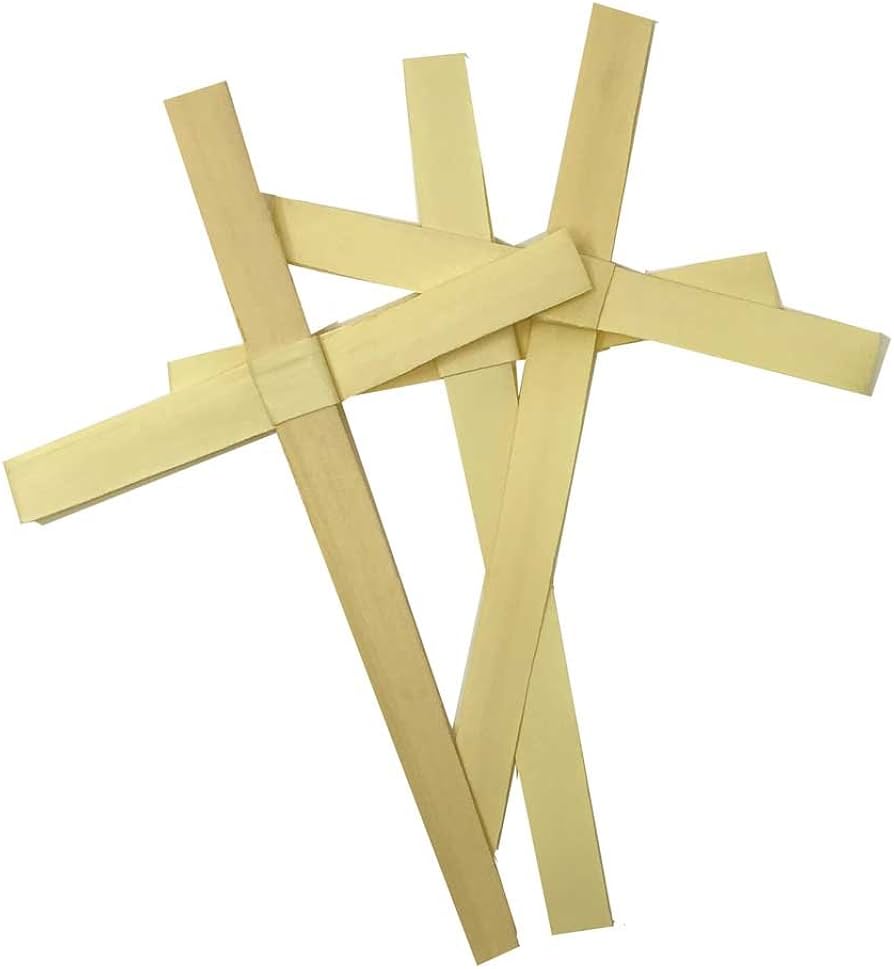
Well, firstly, Jesus acted like a king. “Hosanna”, which means “save us”, was traditionally something shouted out to a king. Throwing your cloak on the ground was a sign of loyalty, often used in royal processions. Waving branches and leaves also gave the impression of a royal procession. We didn’t hear mention of palm leaves in that reading from Matthew earlier, incidentally, because it’s John’s Gospel that mentions that palm leaves, but the gospels all talk of something similar. Jesus’ supporters acted like people welcoming a king.

But as far as the Romans were concerned, the only king who these people were supposed to follow was the Roman Emperor! It was treason to suggest anything else. Decades earlier, the Romans had set up a puppet king, Herod the Great, and called him “King of the Jews”. He was the Herod who had tried to kill Jesus as a baby. But by the time that Jesus was an adult, Judea was ruled directly by a Roman governor, Pontius Pilate. Occasionally Jewish rebels had tried to lead revolts and called themselves “King of the Jews”. The Romans had crushed and killed them. Calling yourself a king without the Romans’ permission tended to end with a death sentence.

But the second message that Jesus gave out was quite different. Although on the one hand, Jesus acted like a king, on the other hand, he really doesn’t. Kings ride on warhorses or chariots. They don’t ride on slow, stubborn animals such as donkeys! It would be like a president or a celebrity turning up not in a limousine but on a pushbike. Jesus would have looked a bit silly. This was a sort of royal procession, but in some ways, it was a parody of a royal procession. It was poking fun at royal processions.

But Jesus wasn’t the first person to think of a king of a donkey. The prophet Zechariah told the people of Jerusalem that their king would come “humble and riding on a donkey, and on a colt, the foal of a donkey” (that’s Zechariah 9,9). Zechariah went on to say that this king, rather than bring war, would “command peace to the nations”.

The Jews who saw Jesus on a donkey would have known Zechariah’s prophecy. They would have known that Jesus’ supporters were proclaiming him a king. But perhaps they would also have recognised that Zechariah was not writing about a warlike king. After his donkey-parade into Jerusalem, Jesus didn’t take the city by force. Instead he led his disciples in a protest at the Jerusalem Temple, overturning tables and challenging moneychangers, causing disruption without physical harm to anyone.

The donkey ride and the Temple protest are the loving, nonviolent but forceful actions of a king whose power does not lie in coercion and military might but in love and truth. The upside-down Kingdom of God cannot fit easily into the categories of this world.

The donkey parade must have been extremely confusing for the Roman authorities. Perhaps that’s why they didn’t break it up. Or perhaps they were a bit less concerned because it was on the edge of Jerusalem rather than the middle. However, I suspect that they were afraid of the crowds if they had tried to stop it, so they let it continue for the time being. It’s worth noting that when Jesus was eventually arrested, it was under cover of darkness and he ironically asked the soldiers why they had not arrested him at the Temple “in the daytime”.

Nonetheless, the people who cheered Jesus and waved palm leaves were taking a massive risk. They didn’t know whether the Roman authorities would react or not. They shouted “hosanna” and celebrated. In the face of injustice and under threat of retribution, they nonetheless rejoiced in love and truth and justice.

What risks have we taken for Jesus? Or what risks are we prepared to take? We might not always think of it as taking risks for Jesus. We may take risks for the sake of love and compassion when we reject the temptation to choose greed or selfishness.

It is risky at times to choose the truth of human dignity and justice over colluding with unjust economic and social systems. It is not easy to do this. We are all broken people in a broken world. We are all compromised by the structures of the world around us. But however much we fail, God keeps offering forgiveness. Jesus shows us the way.

Riding a donkey into Jerusalem, Jesus reminded us that we can celebrate love and truth in the midst of injustice and suffering – without denying the suffering. Remember the passwords and the preparation for collecting the donkey? It’s a reminder that sometimes we need to prepare carefully together, supporting each other and seeking Christ’s guidance, if we are going to challenge the established way of doing things. In confronting injustice without using violence or promoting hatred, Jesus reminds us to love our enemies.

As Jesus rode on that donkey, he knew he would soon face crucifixion. God raised him from the dead, and the powers of sin, death and oppression were put on notice that their days were numbered. The power of love and justice and truth – the power of God revealed in Jesus – will ultimately win out.

It is this power that makes it possible for us to acknowledge the vicious reality of the suffering of the world and still proclaim hope that love will triumph. This is not a naïve hope that denies suffering, but a deep hope rooted in the life, death and resurrection of Jesus Christ.

So like Jesus and his followers on that donkey-ride into Jerusalem, let us defy the powers of injustice, put our faith in the God of love and cry out, “Hosanna! Jesus is king!”.

_________________________________________________________________________________________________________

My book, The Upside-Down Bible: What Jesus really said about money, sex and violence (Darton, Longman and Todd, 2015) can be bought in paperback or e-book, priced £9.99.
Jesus’s blessings turn the world upside-down

Last month (on Sunday 1st February 2026) I had the honour of preaching at Foleshill Road United Reformed Church in Coventry. They are always very welcoming.

Below is the text of my sermon (this is basically the text that I wrote beforehand but in practice I deviated from the wording at times and added in a few extra comments).

The sermon was based on two Bible readings, from the Lectionary for the day:

Matthew 5, 1-12

1st Corinthians 1, 18-31

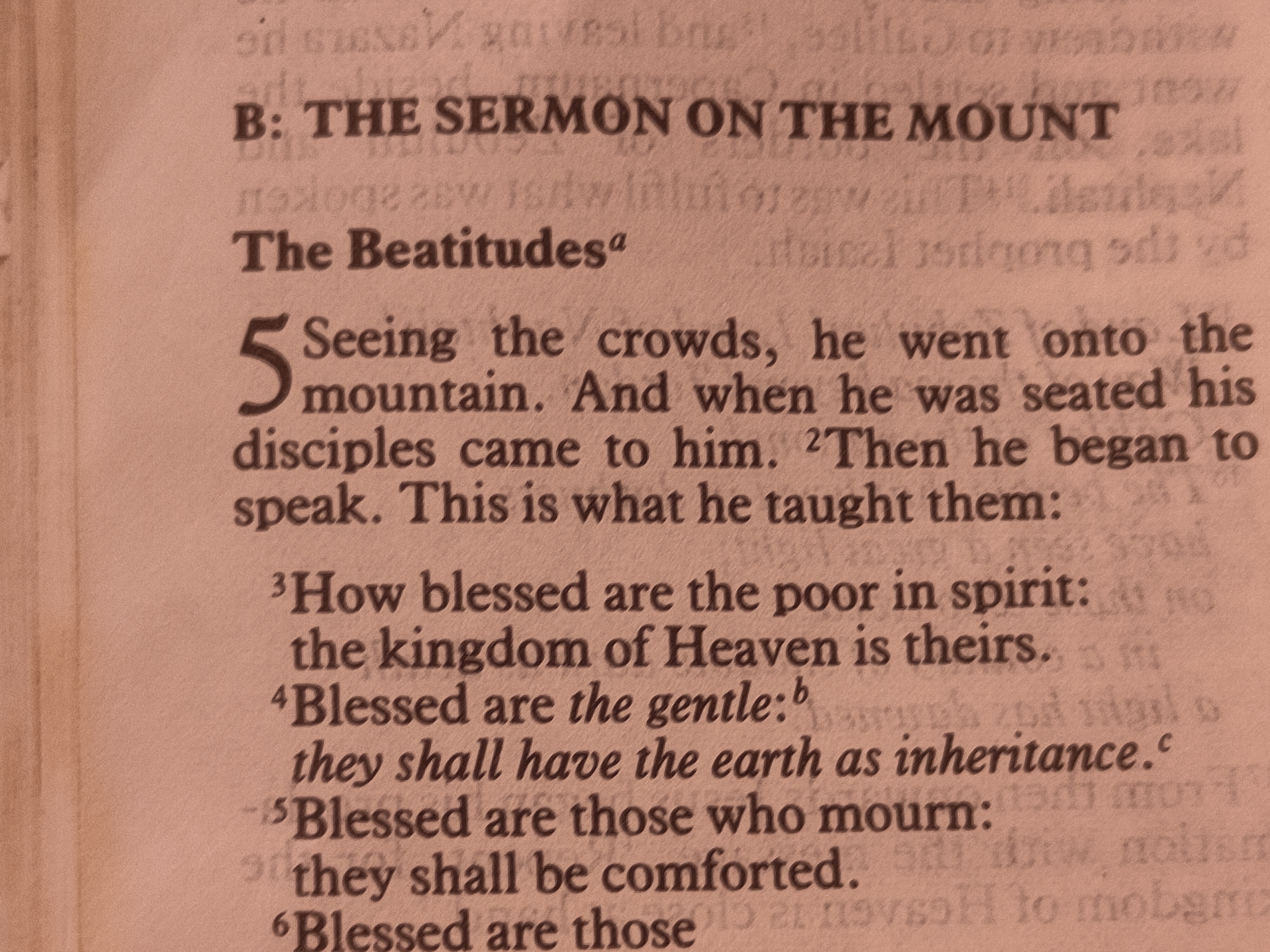
The first reading that we heard today is perhaps one of the most famous passages in the New Testament: Jesus’ list of blessings. “Blessed are the poor in spirit…” and so on. Known as the beatitudes, they come at the beginning of Jesus’ Sermon on the Mount.

Although they might be familiar to many of us, these statements of Jesus are really quite weird. Jesus announces that people who are suffering are blessed. Isn’t that a bit odd? The rich and powerful might feel that they are the ones who have been blessed.

Jesus lived in the Roman Empire. The emperor’s wealth and power were seen as an indication of his divine status. In many other cultures also, it has been assumed that the rich and powerful are blessed by God. Despite Jesus’ teaching, Christians are not immune from this attitude. Following Donald Trump’s election victory, there were Christians in the US saying that Trump had survived the recent assassination attempt because God had chosen him to lead America. Meanwhile, Patriarch Kirill, the leader of the Russian Orthodox Church, says that God has blessed the rule of Vladimir Putin.

So how can we make sense of Jesus’ words? Well, let’s look at where this passage fits. Here we are at the beginning of Chapter 5 in Matthew’s Gospel. Quite a lot has already happened in the first four chapters. Jesus has recruited disciples, started healing and talked a lot about the Kingdom of Heaven. The Kingdom of Heaven is a major theme in Matthew’s Gospel.

Incidentally, “Kingdom of Heaven” in Matthew is the equivalent of “Kingdom of God” in other gospels. We could also call it the “Empire of Heaven”, as “kingdom” and “empire” are the same word in the original Greek of the New Testament.

Let’s remember that Jesus was speaking to people in a predominantly poor society that was facing ongoing exploitation by the Roman Empire. Historians estimate that many – perhaps most – of the population lived near or below subsistence level. Attempted resistance to Roman rule had been brutally suppressed.

In short, Jesus was speaking in a context of poverty and injustice.

Now we are not in first-century Palestine. We are in twenty-first century Britain. We have many things that they did not – economically, socially and politically. Many of these advances were gained by our ancestors struggling for them.

Nonetheless, now, according to Oxfam, the four richest people in Britain own as much as the poorest 20 million. With society still recovering from the Covid pandemic, mental health problems are extremely common. On a global level, the beginning of 2026 has seen fast and unpredictable changes in world politics, with peaceful protesters are being killed in Iran and even in the US, and it is hard to predict where the next war will begin.

Our context is different, but I want to suggest that Jesus still speaks to a world facing injustice, poverty and violence.

So here at the beginning of Matthew Chapter 5, Jesus lists 9 groups of people who he says are blessed.

We can get a bit confused with the word “blessed”. Today the word “blessed” gets used in lots of ways. We might say we feel blessed by what God has done for us, we might pray that God will bless someone or something. There are people who say “Oh, bless!” about a child, or occasionally an adult.

Sometimes the word “bless” is used to patronise people. I am reminded of the theologian John Hull, who used to teach at the University of Birmingham. John Hull was blind and on one occasion, he encountered a Hare Krishna group. One of them told John that because of his blindness he was blessed. When John asked him to explain, the man said, “Well, your teacher Jesus said that it’s wrong to think lustfully about women. And you can’t do that.” John replied, “Dream on, pal”.

The word translated “blessed” in this chapter is sometimes translated as “happy” or “fortunate”. At least one translation uses the word “congratulations”: “Congratulations to the poor in spirit!… Congratulations to those who mourn!”.

These are odd things to be congratulated for.

“Blessed are the poor in spirit”. That’s what Jesus says in Matthew’s Gospel. In Luke’s Gospel, Jesus simply blesses people who are “poor”. I don’t think these two things are very different. Poverty, oppression and humiliation were a daily experience for many of Jesus’ listeners. Many people’s spirits had been broken by such experiences. These people were materially poor, and they were poor in spirit.

Yet Jesus says, “Blessed are the poor in spirit, for theirs is the Kingdom of Heaven”.

Jesus does not say that the Kingdom of Heaven will be theirs. Theirs is the Kingdom of Heaven. The Kingdom of Heaven is a reality that is both now and not yet, breaking into our present even as we look for its complete fulfilment in the future.

Then we have, “Blessed are those who mourn, for they will be comforted”.

Anyone can be in mourning. The richest and most privileged person can be struck with grief. Jesus says they are blessed. However, in a land crushed through poverty and military occupation, it is the poor and oppressed who are most likely to be grieving, particularly to be grieving collectively. Grief can be not only an individual horror but a collective trauma.

So we come to the third beatitude: “Blessed are the meek”. We tend to think of “meek” as meaning quiet, shy, submissive. I am reminded of Monty Python’s Life of Brian, in which someone hearing the Sermon on the Mount says, “I’m glad there’s something for the meek – they have hell of a time”.

Because this can mislead us, some translators use words such as “powerless” or “crushed”. Psalm 37 repeatedly promises the meek that they will inherit the land. This is exactly the same thing that Jesus promises here: “Blessed are the meek, for they will inherit the land” – or “inherit the earth”. The allusion to Psalm 37 cannot have been lost on Jesus’ listeners, living under imperial control. 

So in the first three beatitudes, Jesus has spoken of groups who overlap quite a lot – people who are oppressed, crushed, grieving and powerless.

Then Jesus changes tack slightly. He moves on from talking about people who are suffering and talks instead about how people respond to these realities.  

“Blessed are those who hunger and thirst for righteousness”. Jesus promises that those who are hunger for things to be made right will be filled. Things will be made right. Justice will come about.

He goes to declare that the merciful, the pure in heart, the peacemakers are also blessed.

All these phrases seem to refer to people who are going against conventional wisdom and living differently – by showing mercy, working for righteousness, building peace. Let’s note that peacemaking is about resolving conflict, not avoiding conflict! Indeed, building peace will put you into conflict with people who have an interest in pursuing violence. But Jesus shows a way of engaging in conflict. If you read on beyond this passage, you’ll find that shortly after announcing these blessings, Jesus encourages his listeners to love their enemies!

This is a reminder that while Jesus sides with the poor and marginalised, he shows his love for all people at the same time, while encouraging us all to repent of sin. While most of Jesus’ followers were probably poor, he also called the rich and powerful to repentance. Let’s not forget Zacchaeus who we find in Luke Chapter 19, a wealthy and exploitative man who after meeting Jesus gave half his wealth to the poor. He repented, and hungered for righteousness.

So Jesus says the oppressed are blessed. Then he says that those who try to change things are blessed. Then he changes tack slightly again.

“Blessed are those who are persecuted for righteousness’ sake, for theirs is the kingdom of heaven. Blessed are you when people revile you and persecute you and utter all kinds of evil against you falsely on my account. Rejoice and be glad, for your reward is great in heaven.”

Jesus is realistic. He knows what often happens to people who challenge dominant values and side with the marginalised

This can be hard to relate to. In the UK today, Christians are not as a group persecuted. Yet Christians still face extreme persecution in countries including North Korea, Iran, Saudi Arabia and elsewhere.

As Christians in the UK we may nonetheless face negative reactions when our faith inspires us to live differently, to speak out, to campaign for a better world.

In the USA today, Christians who never expected persecution are finding the situation changed. Pastors in the US have spoken of being detained by ICE, Trump’s deportation enforcers known for snatching people off the streets with very little accountability. Following ICE’s killing of peaceful protesters, I was shocked to read that the Anglican Bishop of New Hampshire, Rob Hirschfield, has asked his clergy to make sure their wills are written. He said, “It may be that now is no longer the time for statements, but for us, with our bodies, to stand between the powers of this world and the most vulnerable”.

Jesus says the oppressed are blessed. He says those who try to live differently and change things are blessed. He finishes by saying that people who suffer lies and persecution because they live differently and try to change things – well, they’re blessed too.

But how on Earth can any of these people be blessed? Marginal, outcast, apparently irrelevant people? Isn’t it absurd?

Of course it’s absurd. That’s the point. Jesus is turning common assumptions on their head.

The Empire of Rome belongs to the Emperor, the Senate, the rich and powerful people in Rome and their puppets among local leaders who had sold out to them. But the Empire of Heaven belongs to the poor in spirit, the grieving, the powerless, the people who hunger for righteousness, the peacebuilders, the merciful, the persecuted and so on. As we heard earlier in the passage from 1st Corinthians, God makes foolish the wisdom of the world.

The world’s wisdom is turned upside-down by the life, death and resurrection of Jesus Christ. The Roman Empire thought they could execute a troublemaking Jewish peasant. But God sides with the poor and oppressed, so the troublemaking Jewish peasant rose from the dead and the powers of this world are put on notice that their days are numbered. Sin and death may look strong, but Jesus’ resurrection reveals that love and life will ultimately triumph.

As Paul writes in 1st Corinthians – in the passage we heard earlier – “God chose what is foolish in the world to shame the wise; God chose what is weak in the world to shame the strong”.

The change that comes with resurrection cannot be put off until we die. As Christians we believe in life after death, and we also believe in life before death. Resurrection means that the dead are raised and that the living can live differently. It also allows us to look at the effects of our actions beyond the time of our own lives. Jesus makes the world’s transformation possible.

Jesus calls us to live in loyalty to the Kingdom of Heaven, or Kingdom of God now, not just in the future.

Of course, we frequently fail. We are all entangled in sinful systems and unjust structures. We wrestle with difficult decisions and moral confusions. However often we fear to ask for forgiveness, God in God’s mercy never tires of forgiving us. And if the situation we face leads us to be crushed, powerless, poor in spirit? God reminds us he is on our side.

So when will the powerless inherit the land? When will those who hunger and thirst for righteousness be filled?

While the Kingdom of God can only reach its fulfilment with the return of Jesus, the New Testament makes clear that the Kingdom of God is constantly breaking into our world. When people are fed, when love appears, when injustice is challenged and kindness triumphs over cruelty, the Kingdom of God is breaking in.

It can be hard to keep faith in the worst times. As the hymn we sang earlier puts it, “It’s hard to dance with the devil on your back”. But the reality of the resurrection gives us hope. As Martin Luther King put it, the moral arc of the universe bends towards justice.

Father forgive us, we don’t know what we’re doing

Yesterday (Sunday 23rd November 2025) I led worship at Sherbourne Community Church in Coventry. It is always an honour to be asked to do so. Below is the text of my sermon.

To be clear: this is basically the text that I wrote beforehand but in practice I deviated from the wording at times and added in a couple of extra comments. However, the substance is much the same.

The sermon followed two Bible readings:

Luke 23, 33-43

Colossians 1, 11-20

There was nothing remarkable about the crucifixion of Jesus. That is to say, from the point of view of the Roman soldiers assigned to the job, there was nothing remarkable about the crucifixion of Jesus. The Roman authorities crucified people all the time.

It was a common form of execution for criminals, particularly for rebels and troublemakers. Revolutionaries were crucified, if they tried to rise up against Roman rule. Slaves were crucified, if they resisted their supposed owners. In the Roman Empire, crucifixion was a method of execution for people who defied authority, who did not accept their place in the order of things. It says something about the brutality of the Roman Empire that they used crucifixion to punish such people. And it was commonplace. For the Roman soldiers, it was, perhaps, all in a day’s work.

Jesus wasn’t even the only person they were crucifying that day. As we heard earlier, Luke tells us, “They crucified Jesus there with the criminals, one on his right and one on his left”.

I wonder if and when the soldiers realised that there was something very different about this particular victim. Perhaps it was when he told one of the other people being crucified that he would shortly be in paradise. Or perhaps it was earlier, when he said, “Father, forgive them, for they do not know what they are doing”.

“Father, forgive them”.

Forgiveness is not easy. Many of us do not find it easy to forgive people who have hurt us. How much harder would it be to forgive people as they are literally killing us? Could you forgive someone as they killed you? Could I? As I’ve never been in that situation, I honestly don’t know. I can only pray that God would give me the strength to do so.

Now in Coventry, of course, we’re used to seeing the words “Father, Forgive” displayed prominently. They’re written in the ruins of the old cathedral, destroyed by German bombing 85 years ago this month. I praise God that anyone in Coventry was able to think of forgiveness at the time of that bombing. There were others, I’m sure, who found it difficult or impossible to do so. But the story is well known. After the war, volunteers from Germany helped to rebuild Coventry Cathedral, just as volunteers from Britain helped to rebuild the cathedral in Dresden, where the old cathedral had been destroyed by British bombing. It’s a remarkable story of forgiveness and reconciliation, and a noble part of Coventry’s history.

So why were there people in Coventry and Dresden who were prepared to forgive the bombers? Because they were following Jesus’ example, perhaps? And that leads to another question. Why did Jesus ask his Father to forgive his killers? He wasn’t forgiving people because they were repenting. He wasn’t offering forgiveness to people confessing their sins. He was offering forgiveness to people who were continuing to sin in the most extreme way possible – they were literally murdering him! What did he mean when he said, “Father, forgive them, for they now not what they do”? Or to put it in more contemporary English, “Father forgive them, because they don’t know what they’re doing”?

Some people say it’s because the soldiers didn’t realise who Jesus was, they didn’t realise they were killing the Son of God. And of course that’s true. But at the same they knew they were killing someone. They knew they were crucifying someone. And crucifixion is one of the most painful forms of death that human cruelty has ever invented. So surely they knew some of what they were doing? 

Perhaps we’ll understand more if we ask why these soldiers were killing Jesus. As Christians, of course, we believe that Jesus’ death has significance for the whole world, and for all time. But I think we can understand how and why it does so if we think more about why Jesus was killed, why Jesus was executed, in the first place.

So who killed Jesus? These Roman soldiers, who we’ve just been talking about, who nailed him to a cross, who cast lots for his clothes, who mocked him and put up a sarcastic sign describing him as “king of the Jews”. They killed Jesus. Why did these soldiers kill him? Well, they were obeying orders. The death sentence had been passed by Pontius Pilate, the Roman governor of Judea.

Despite this, for centuries, many churches have taught that Jesus was killed by “the Jews”. It is still quite common to hear this. Like me, you’ve probably heard it said that “the Jews killed Jesus”. Indeed, I heard a street preacher in Birmingham say this only a few months ago. But it makes no sense.

Jesus was a Jew. Jesus’ first followers were Jews. His arguments with Pharisees and Sadducees were arguments among Jews. The gospels – particularly Matthew and John – draw our attention to the role of Jewish leaders in persecuting Jesus. But these were the Jewish leaders kept in place by the Romans, not chosen by the Jewish people. The High Priest of the time could keep his job only as long as he kept the Romans happy. These leaders were part of the influential Sadducee faction, resented and opposed by many other Jews for their collaboration with Roman rule.

I dare say that many of these people genuinely believed they could get a better deal for the Jewish people by co-operating with the Romans. John’s Gospel tells us that the High Priest, Caiaphas, feared that the Roman authorities would become so scared of Jesus’ preaching that they would brutally suppress the Jewish people as a whole. According to John’s Gospel, the High Priest supported the execution of Jesus because he thought it was better “to have one man die for the people than to have the whole nation destroyed” (that’s John 11,50). Perhaps all of us, at times, can convince ourselves that colluding with injustice will serve a greater good. Father, forgive us, because we don’t know what we’re doing.

But Jesus was sentenced to death by the Roman governor, Pontius Pilate, and killed by the Roman soldiers obeying Pilate’s orders. One of the oldest surviving Roman references to Christians, written by Tacitus in the early second century, says little about them other than that Christ has been executed by Pontius Pilate.

So why have churches for centuries claimed that Jesus was killed by “the Jews”? Well, it’s partly down to anti-Semitism. But also, blaming “the Jews” helps to ignore another awkward truth about the death of Jesus.

At times over the last few centuries, church leaders have been very powerful. They have shared an interest in preserving the status quo. To acknowledge that Jesus was executed by the Roman Empire would mean recognising that the Romans executed revolutionaries, troublemakers, slaves – people who got above themselves. It has always been awkward for some people to accept that Jesus not only sided with outcasts but defied authority and challenged the rich and powerful. Much easier to put the blame on “the Jews”.

Of course, Jesus’ resistance to authority went way beyond a simple political programme for the moment. He challenged all sin, all systems that divide people, all attempts to dismiss some people as less important than others. Love for all is a subversive message. Jesus proclaimed the “Kingdom of God”. In the Greek of the New Testament, this can also be translated as the “Empire of God”. No wonder the authorities of the Roman Empire considered this alternative empire to be a threat. As we heard earlier in the reading from Colossians, God has rescued us from the power of darkness and transfers us to the kingdom of his beloved son.

When we heard from Luke’s Gospel, we saw the soldiers mocking Jesus and saying, “Let him save himself if he is the Messiah!”. They imagined that if Jesus were really powerful, he would use force to bring about his will. To them, power was about violence and coercion. They were not used to the power of love that Jesus embodied.

“Father, forgive them, because they don’t know what they’re doing”. Well, the Roman soldiers knew they were torturing a man to death, even if they did not understand who that man was. But we might well consider them less guilty that Pontius Pilate and the other leading Romans who gave the orders. Similarly, when we think of the Luftwaffe bombing Coventry, the bombers surely knew they were killing innocent people, even if they did not understand the full impact, but we might want to put more blame on the Nazi leaders who sent them to drop the bombs.

Powerful leaders who give orders, however, are powerful only when people obey their orders. At the same time, to refuse those orders can take almost unimaginable courage unless others do so at the same time. Members of Hitler’s armed forces who did refuse orders were executed almost immediately. Amazingly, some refused and accepted death. But it is hard to judge those who didn’t. So the cycle of sin goes round and round, at times appearing like it can never be broken.

Some years ago, I sat in a café in Jerusalem interviewing an Israeli ex-soldier who had decided to refuse his call-up to the reserves. He had wanted to follow his conscience by treating Palestinians with respect when he was manning checkpoints. But he had come to the conclusion that by serving in the army at all, he was helping to uphold an unjust occupation. He said something which has stuck with me. He said, “You cannot live morally in an immoral system”.

The problem of course is that all of us, to one extent or another, are part of immoral systems. Sometimes, the Kingdom of God breaks through, witnessed in moments of kindness, acts of love, and campaigns for justice. But all of us, nonetheless, are complicit even in the sins that we seek to resist. For example, however ethical you try to be, it is almost impossible not to buy at least some products that have been produced unethically. This is not a reason just to give up and not think about ethics when you buy things! Nor is it a reason to beat yourself up and become obsessive so that you never buy anything unethical, as if that were possible. It is a reason for humility, to recognise that we are all broken people in a broken world, that we commit the very sins against which we protest, that we will constantly mess up even as we pray that God will help us to improve the way we live and to change the world around us.

Sometimes in our confusion, all we can do is to turn to God and say, “Father, forgive us, because we don’t know what we are doing”. And we pray that God will transform us, transform each other, transform our communities and our world.

This is where the historical details of Jesus’ death point to its meaning for all time. To the Roman soldiers who hammered in the nails, perhaps it was just another day at work. To the Roman authorities, this was just another troublemaking Jewish peasant who could easily be killed off. Perhaps to the High Priest and his colleagues, this was just another necessary compromise.

But it didn’t work. Crucifixion was supposed to crush people who resisted authority. But resurrection is the ultimate example of resistance to authority: when you’re executed by the state, you’re supposed to stay dead. Jesus, the sinless human being, defeated sin. The divine human being defeated death.

Jesus rose from the dead, because the forces of sin and violence could not hold him. Yes, sin and injustice still have much power in the world. We are still compromised by them and entangled with them. But with Jesus’ resurrection, the forces of sin, oppression and empire are put on notice: the final victory of love and justice is assured, the salvation that comes through grace and forgiveness has begun. As Colossians puts it, in Christ we have redemption, the forgiveness of sins. All the power of a mighty empire, all the mockery of armed men, all the cynicism of casual violence, are no match for the power of love embodied by the Christ who in the midst of unbelievable horror says simply “Father, forgive”. 

________________________________________________________________________________________________________________

My book, The Upside-Down Bible: What Jesus really said about money, sex and violence (Darton, Longman and Todd, 2015) can be bought in paperback or e-book, priced £9.99.

The Gospel of Hope on Remembrance Sunday

On Remembrance Sunday a week ago (9th November 2025), I had the honour of preaching at Renew Inclusive Church, a Baptist church in Cambridge. They are very hospitable and made me very welcome. Below is the text of my sermon.

Although this is the text that I wrote beforehand, I deviated from the wording slightly in practice. However, the substance is the same.

The sermon followed two Bible readings:

What does the word “Remembrance” mean to you?

It seems that the meaning of the word “remembrance” isn’t quite the same as the meaning of the word “memory”. They sound like they should mean the same thing. But we use them differently. “Remembrance” isn’t just something we happen to remember. It’s something we choose to remember. And we’re used to this in Christian worship. When we take Holy Communion later, we’ll hear Jesus’ words: “Do this in remembrance of me”.

So remembrance involves choice: choosing to remember. And often, that isn’t easy. When we remember Jesus being killed, we remember a crucifixion – a human being killed. It’s not easy to think about. Sometimes, when we think about death and suffering, it is easier to forget. Or at least, it can feel easier in the moment to bury painful memories, to ignore difficult feelings, though of course that often turns out to be more difficult in the long run.

On Remembrance Sunday, we are invited to remember war. that is difficult. It is unimaginably difficult for people who have experienced war directly. Those of who have not experienced war directly, or who have only witnessed it from the margins, can be tempted to sanitise war. Instead of listening to the experiences of those who have gone through war, we may talk of honouring them – and then quickly move on.

But suffering isn’t easy to talk about. You might have experienced this if you’ve been bereaved, and well-intentioned people have – understandably – tried to say reassuring things when perhaps what you really need is someone to recognise just how terrible you feel. 

But whether we have experienced war directly, whatever we believe about the rights and wrongs of this war or that war or war generally, we all know that war is indescribably horrific. And if we are serious about remembering war, we have to face reality with honesty.

We do ourselves no favours if we pretend that remembrance is straightforward, easy or uncontroversial. Let’s have the honesty to acknowledge that remembrance is a painful – and often controversial – subject. In the first few years after World War One ended, wealthy people marked the anniversary of the Armistice on 11th November each year by holding a Victory Ball to celebrate. Veterans, struggling with poverty, demonstrated outside the Victory Balls in protest. My own great-grandfather, who fought at the Somme and won five medals in World War One, had to pawn all five of his medals after the war to feed his family. Gradually, the anniversary was marked in a more sombre way. But in 1921, veterans protested against their ongoing poverty by marching past the Cenotaph with pawn tickets pinned to their lapels instead of medals. It was an embarrassment for the government.

Remembrance continues to throw up difficult questions. What should we remember? How should we remember? Who should we remember? Many of us understandably want to remember those with whom we have a personal connection, perhaps people who we know or knew, perhaps those from our own area or who consider to have been on our own side. At the same time, let’s recognise the truth that most people who suffer in war, even most people who fight in war, have limited choice even as to which side they are on. I mentioned that my grand-grandfather fought at the Battle of the Somme. I’m very aware that if he had been born in Berlin instead of Birmingham, he would have fought on the other side at the Battle of the Somme. I’m sure many of you can think of similar examples from your own lives or your own families.

I suggest that the demands of truth, and the Gospel’s call to love our neighbour, mean that we should seek to remember victims of war of all nationalities on Remembrance Sunday. To remember the past is to learn from it. I dare say there are various views in this room about what lessons we should learn from war and about how we build peace. But the good news of Christianity is not about pretending that everything’s okay or that we have all the answers. The Gospel is not a trite reassurance. It’s about hope amidst horror. We have no business proclaiming the hope of the gospel if we do not recognise that we are broken people in a broken world, if we do not recognise the depth of the suffering into which we proclaim good news. We do not have all the answers. We look to God to guide us as we search for them.

Earlier we heard from Matthew’s Gospel, from a passage about unfathomable violence – about a massacre of children. Can any of us imagine anything more horrific? In the world today, civilians make up as much as 90% of war casualties, and the killing of children is – appallingly – not a rare event. Yet Matthew describes this horror right in the middle of the story that proclaims the hope that comes with the birth of Jesus and the failure of Herod to defeat him. Jesus brings hope amidst the horrors of violence, death and war.

I’m sure there are varied views in this room about what lessons we should learn from war, and about how we build peace. I suspect many of us do more to build peace than we realise. I have the privilege of working in a multifaith chaplaincy at Aston University in Birmingham. Every week, I see students reach across divides to build understanding with people who are different to themselves. In Welcome Week in September, I saw students of varied nationalities, faiths, personalities, cultures and sub-cultures simply start chatting, eating and playing games together in the Chaplaincy. It was just after there had been a spate of far-right protests outside accommodation for asylum-seekers, just as parts of the media were stirring up anti-migrant feelings and dividing people against each other, yet here at the grassroots in a university campus, ordinary 18-year-olds were unconsciously defying the hatemongers with their everyday reactions. In the Chaplaincy, I have sat and drunk tea with the President of the student Palestine Society and one of our university’s most pro-Israeli students, simply because they both happened to wander into the Chaplaincy at the same time. I thank God that that they did. I sometimes think our students could do a better job of sorting out the world’s problems than the politicians and diplomats. They restore my faith that God can lead “ordinary” people to achieve reconciliation and resolve differences; to build peace.

Martin Luther King spoke of two forms of peace: a “negative” peace, which is only the absence of conflict, and a “positive” peace, which involves the presence of justice. He insisted that building peace does not mean avoiding conflict. Indeed, building peace might put us in conflict with those who uphold injustice. But King encouraged people to engage in conflict nonviolently, with love for enemies and with a hope of reconciliation.

These two forms of peace – negative and positive – are very much on show in the New Testament.

The Roman Empire claimed to bring peace to the places they conquered. The Roman authorities said they offered conquered peoples “peace and security”. This supposed peace consisted of an absence of conflict. And there was no visible conflict because it was violently suppressed. With their enemies killed, there was no-one to disturb the “peace”! The apostle Paul mocked the Roman Empire’s claims about peace. In his first Letter to Thessalonian Christians, he wrote, “Just as they are saying, ‘There is peace and security’, sudden destruction will come upon them” (that’s 1st Thessalonians 5,3). To his original readers, it would have been obvious that the people saying, ‘There is peace and security’ were the Roman authorities. Paul and his readers knew that that the Empire had not brought any real peace or security.

In contrast to the fake and brutal peace of the Roman Empire, the New Testament offers us the just and lasting peace of Jesus Christ. “My peace I give to you,” says Jesus to his followers at John 14,27. “I do not give as the world gives”. This is a different peace to the imperial stifling of conflict or dissent. This is the peace demonstrated by Jesus in the nonviolent defiance of turning the other cheek. This is the peace of the upside-down Kingdom of God in which the last are first, the poor are blessed, the weak are strong and power is found in love.

Let us remember war with honesty to recognise its horrors and moral confusions. Let us remember war with humility to learn from those who have experienced it differently or more directly than us. Let us pray that God will guide us in learning as we remember, so that we may work with others to build peace – not the peace of trite reassurance, or the avoidance of conflict, or the suppression of dissent, but peace built on the justice of the Kingdom of God proclaimed by Jesus. So that as we learn from the realities of war, God will give us the hope, and show us the tools, with which to beat our swords into ploughshares and our spears into pruning-hooks.

The Peace of Christ or the Peace of Rome?

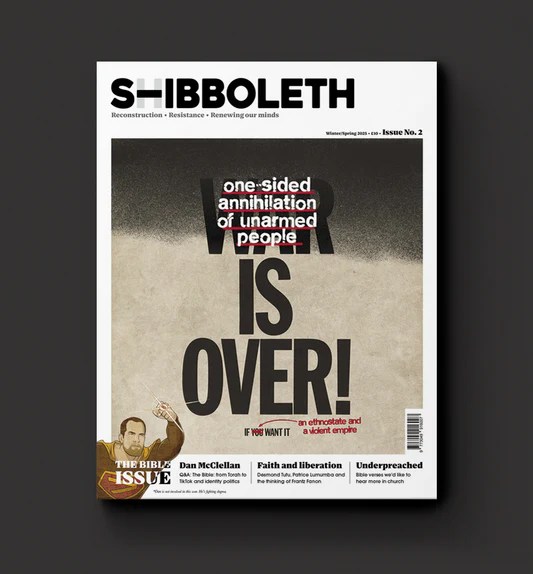
I was honoured to be asked to write about active nonviolence for Shibboleth, an excellent new Christian magazine that I heartily recommend (not just my own article!). This is my article, which appeared in Issue 2.

Jesus was executed by one of the most violent empires in history.

It is staggering just how rarely this is mentioned in churches. For centuries, we have been told that Jesus was killed by “the Jews”. Antisemitism has combined with attempts to depoliticise Jesus’ message by shifting the blame away from imperial authorities.

We cannot, however, get away from the fact that Jesus was condemned to death by Pontius Pilate, Roman governor of Judea. The gospels present the Jewish leaders as complicit in Jesus’ death, but these were the Jewish leaders who collaborated with Roman rule and owed their position to not upsetting the Romans. They were not representative of Jews generally.

Supporters of Roman rule championed the “Pax Romana” or Peace of Rome. For them, “peace” was a euphemism for order, control or an absence of conflict. There is no conflict when all resistance is crushed. The Romans claimed to bring “peace and security” to conquered lands. “When they say ‘peace and security’, then sudden destruction will come upon them,” wrote Paul in one of his earliest letters (1 Thessalonians 5,3).

Jesus proclaimed a very different sort of peace. I suggest that to understand Jesus’ teachings, we need to recognise that he was speaking to people for whom violence was a daily reality. They included civilians abused by Roman soldiers, slaves beaten by their “owners”, women mistreated by men.

Yet many Christian discussions of the ethics of violence start from the wrong place. They focus on war between nation-states and the decisions of governments.

Of course, national wars appear in the Hebrew Bible (Old Testament), which contains varied attitudes to violence. Those passages that justify massacres do not in any sense point to the God revealed in Jesus Christ. Many other parts of the Hebrew Bible include prophetic condemnations of violence and oppression. At certain points, Israelite forces are reminded to rely only on God’s strength – Gideon is told to reduce the size of his army so his victory is attributed not to military power but to God’s power (Judges 7,2).

Wars between nation-states today generally involve people being ordered to fight by their governments, based on the bizarre premise that we all have more in common with our rulers than with people like us who happen to have been born on the other side of a line on a map.

But the Christ who breaks down barriers exposes the reality of violence. And it is with Jesus’ teachings that a Christian ethic must surely begin.

When Jesus’ spoke about turning the other cheek, he was speaking to people who were used to being hit.

“If anyone strikes you on the right cheek…” says Jesus (Matthew 5,39). To be hit on the right cheek (with the right hand) implies a backhanded slap. This was the way in which people disciplined supposed inferiors. Masters backhanded slaves, men backhanded their wives, employers backhanded workers.

The submissive response to being hit is not to turn the other cheek but to cower, cringe or step backwards. These are all very understandable reactions. To respond with violence is also understandable, though probably futile when the aggressor has far more power. But calmly turning the other cheek is a gesture of nonviolent defiance, potentially confusing the aggressor and tipping the balance of power, at least for a moment.

Of course it does not work in every situation. The same can be said of Jesus’ teaching to go “another mile” – which would cause trouble for Roman soldiers who were permitted to require civilians to carry their packs for only one mile (Matthew 5,41). These methods of nonviolent defiance are suggestions. Different contexts need different suggestions, with similar principles.

Jesus’ protest in the Temple is sometimes presented as inconsistent with turning the other cheek. I suggest instead that Jesus’ teachings and actions are entirely consistent. The Temple protest was disruptive but not violent (violence involves hurting people, not damaging tables). It involved the same principles of nonviolent resistance that Jesus championed in the Sermon on the Mount.

Active nonviolence is not about judging those who are driven to resist violence with violence. I cannot condemn someone who picks up a gun in a horrendous situation that I have never faced and cannot imagine. This is different to encouraging such things.

Active nonviolence is about seeking to live by a different power. This is the power of the Kingdom of God that Jesus proclaimed, which turns notions of kingship on their head. The Kingdom is both now and not yet, a future reality that is glimpsed in the here and now in every moment that testifies to the love of God, from small moments of kindness to global campaigns against injustice.

Given its centrality in the New Testament, it is very surprising that we don’t talk more in churches about loving our enemies. Loving enemies does not mean having no enemies (how can you love your enemies if you haven’t got any?!). Nor is it a concept that can just be explained away, as with Augustine of Hippo’s tortuous argument that it is possible to love someone while killing them. Arms dealers and militarist politicians are my enemies, but I cannot kill or demonise them, nor fail to recognise my own sin and complicity in violence, if I love them in the upside-down power of the Kingdom of God.

The New Testament makes clear that living by this power – or trying to – is not about avoiding conflict. As Martin Luther King pointed out, a commitment to peace involves conflict with those who wage war. When Jesus said that he had “not come to bring peace but a sword”, he spoke about divisions within families and communities, so in that context he meant “peace” in the narrow sense of an absence of conflict (Matthew 10,34-36). The gospel involves conflict with forces of violence and injustice.

The New Testament does not teach us either to kill our enemies or to pretend that we have no enemies. Serving the Kingdom of God involves engaging in conflict with love – something that it is not possible in our own strength, but only by the subversive, transformative power of God that we see in the life, death and resurrection of Jesus. This is a power that forces of violence and domination will not tolerate. That is why, as the Quaker peace campaigner Helen Steven used to put it, following Jesus “leads straight into trouble”.